
English


Views: 0 Author: Site Editor Publish Time: 2026-09-22 Origin: Site


Fuel costs represent one of the largest variable expenses in compact equipment operation. They directly impact profit margins on tight bids. Equipment fleets operate on thin margins, and a sudden spike in diesel prices can erase project profitability overnight. While a mini backhoe offers distinct advantages in confined spaces, its efficiency remains highly dependent on internal mechanics. How power is managed between the drivetrain and the boom directly dictates fuel burn. Predicting operational costs requires moving past manufacturer baseline figures. You must analyze how hydraulic configurations, task intensity, and operator habits interact on the actual job site. This guide details the core factors driving fuel consumption. You will learn how modern engine tiers and variable pump designs alter your daily fuel requirements. We explore how different workloads, from trenching to stockpiling, shift engine demands. Finally, we provide actionable strategies to curb idle time and improve machine selection. Fleet managers and owner-operators can use this knowledge to forecast expenses accurately.
Hardware dictates the baseline: Hydraulic system efficiency (e.g., variable displacement vs. fixed gear pumps) is the primary mechanical driver of fuel economy.
Task intensity varies the burn: Digging and loading place entirely different demands on engine RPM and hydraulic flow, changing hourly fuel consumption.
Idle time is the silent drain: Up to 30% of a machine’s running time can be unproductive idling, artificially inflating fuel costs per ton of material moved.
Procurement requires real-world data: Evaluating a diesel backhoe loader demands comparing actual work-cycle consumption rates, not just theoretical engine efficiency.
Equipment buyers often index heavily on the initial purchase price. They neglect the long-term operational costs driven by fuel burn over a standard 5,000-hour machine lifespan. Assessing financial returns requires a broader perspective. You must factor in daily diesel expenses to understand true profitability. Accurate mini backhoe fuel consumption models allow for precise project bidding. They help fleet managers establish competitive yet profitable rates for trenching and excavation jobs. When you know your exact burn rate, you avoid underbidding on fuel-heavy tasks.
We must address the transparency gap prevalent in OEM spec sheets. Manufacturers often list "gallons per hour" or "liters per hour" metrics based on highly controlled tests. Engineers measure these figures under optimal, steady-state conditions. They run machines on flat terrain with consistent loads. These ideal scenarios do not reflect the erratic nature of real-world construction. Job sites involve hard clay, uneven ground, and constant starts and stops. Relying solely on brochure figures guarantees miscalculated job costs. You need a dynamic evaluation framework. This framework must account for resistance variations, operator skill levels, and actual working hours versus idle hours. Understanding these variables transforms fuel management from a guessing game into a predictable science.
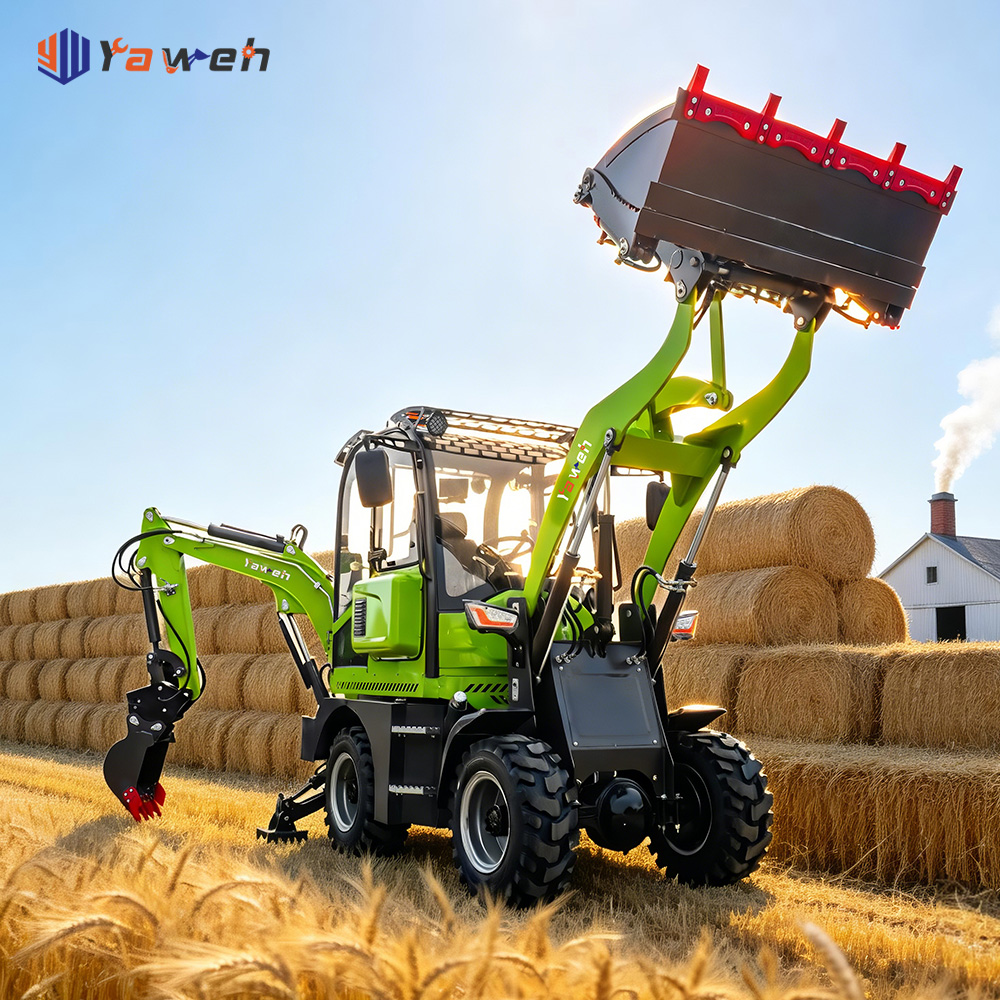
The mechanical makeup of a diesel backhoe loader determines its maximum potential efficiency. Two primary evaluation dimensions drive this baseline: modern engine technology and fluid pump design. You cannot achieve optimal fuel economy if the underlying hardware is inherently wasteful.
First, we must evaluate engine technology. Modern Tier 4 Final and Stage V diesel engines manage fuel injection and combustion quite differently than older generation models. Engineers designed these powerplants to minimize particulate matter and nitrogen oxides. They achieve this through ultra-high-pressure common rail fuel injection. This precise metering ensures every drop of diesel burns completely, extracting maximum energy. However, buyers must acknowledge a distinct trade-off. Emission compliance components occasionally alter fuel burn. Systems utilizing a Diesel Particulate Filter (DPF) trap exhaust soot. When the filter fills, the engine initiates a regeneration cycle. During active regeneration, the system injects small amounts of extra fuel into the exhaust stream. This raises exhaust temperatures to burn off the trapped soot. While necessary for compliance, regeneration cycles temporarily increase your hourly fuel consumption rate.
Second, you must scrutinize hydraulic system efficiency. This component dictates how effectively engine horsepower translates into digging force. Manufacturers typically utilize one of two pump designs.
Fixed-displacement gear pumps: These older-style pumps draw constant power from the engine regardless of the actual load. They push a continuous, fixed volume of fluid through the system. If you are only lifting a light load, the excess fluid diverts over a relief valve. This generates wasted heat and burns unnecessary fuel during low-demand tasks.
Load-sensing or variable-displacement piston pumps: These intelligent systems only supply hydraulic flow when demanded by the joystick. If you move the control slightly, the pump strokes just enough to meet that specific demand. They adjust output dynamically based on resistance. This technology is a critical evaluation criterion for buyers looking to maximize compact backhoe efficiency. It ensures the engine only works as hard as the task requires.
How the machine distributes power during specific work cycles dictates the actual consumption rate. You cannot rely on a flat hourly metric for diverse applications. Different tasks tax the engine and hydraulics in unique ways. We must break down these specific operations to understand their fuel impact.
Stationary excavation relies almost entirely on hydraulic power. The machine remains securely planted on its stabilizers. The drivetrain sits idle. Trenching requires massive breakout force at the bucket teeth. You need maximum hydraulic pressure to pull the bucket through compacted soil, roots, or rocky terrain. However, this high pressure does not always require maximum engine speed.
Once the bucket engages the soil and breaks the surface tension, operators can maintain momentum at lower engine RPMs. Fuel consumption naturally spikes during the initial ground break and the heavy lifting phases. The pump strokes fully to deliver power. Skilled operators feather their controls during the swing and dump phases. Swinging an empty or loaded bucket over an open trench requires minimal resistance. Reducing RPM during this phase saves significant fuel over a ten-hour shift. Relying on sheer engine speed instead of hydraulic leverage wastes diesel and creates unnecessary heat.
Front-end loader work presents a completely different power profile. digging and loading materials like gravel, mulch, or topsoil demands high engine RPM. The operator needs significant tractive effort from the transmission to push the bucket deep into a dense pile. Simultaneously, they need hydraulic lifting power to raise the heavy load.
This dual demand taxes the system heavily. Constant forward and reverse directional changes heavily engage the transmission. The torque converter slips and grips continuously under heavy load. This combination results in a much higher sustained fuel burn compared to stationary backhoe digging. Moving the entire gross weight of the machine across a muddy yard requires substantially more kinetic energy than simply swinging a boom from a fixed position. The rolling resistance of the tires on soft ground further compounds the required engine output.
Power Distribution and Fuel Impact Across Work Cycles
| Work Phase | Primary Power Draw | Engine RPM Requirement | Fuel Consumption Impact |
|---|---|---|---|
| Trenching (Breakout) | Hydraulic System | Medium to High | Intermittent Spikes |
| Trenching (Swing/Dump) | Hydraulic System | Low to Medium | Moderate |
| Stockpile Penetration | Drivetrain & Hydraulics | High | Sustained High |
| Truck Loading (Travel) | Drivetrain | Medium to High | Moderate to High |
The most fuel-efficient machine will still bleed profit if you operate it poorly. Human factors frequently override mechanical efficiency. We must address how job site management and daily habits influence your bottom line.
The idle time drain represents a massive financial leak for construction fleets. Industry studies and telematics data routinely show compact equipment spends a huge percentage of operating hours simply idling. Operators leave machines running during breaks. They idle while conducting ground-level inspections. They leave engines turning while waiting for delayed dump trucks to arrive. Up to 30% of a machine’s logged time can be entirely unproductive.
This habit carries severe financial risks. Idling wastes expensive diesel without moving a single yard of dirt. It prematurely consumes warranty hours, pushing you closer to expiration without generating corresponding revenue. Furthermore, excessive idling accelerates scheduled maintenance intervals. In modern Tier 4 engines, prolonged idling lowers exhaust temperatures. Low temperatures prevent passive soot burn-off, leading to rapid DPF clogging. This forces the engine into frequent, fuel-heavy active regeneration cycles or even limp mode.
Operator technique plays an equally crucial role in fuel management. We frequently see novice operators relying on full-throttle operation for tasks requiring only 60% engine speed. Pinning the throttle does not always increase cycle times. Often, it merely generates excess hydraulic heat, increases cab noise, and burns more fuel.
Poor bucket fill factors also multiply fuel costs exponentially. Consider the math. If you take three scoops to move a volume of material that should fit in two scoops, you cycle the machine three times instead of two. This means you use 33% more fuel for the exact same physical output.
Best Practices for Operators:
Turn off the engine if downtime exceeds five minutes.
Utilize eco-mode for light grading and clean-up tasks.
Focus on optimal bucket angles to ensure a full payload every pass.
Avoid relying on the throttle pedal as a substitute for smooth hydraulic control.
Procurement managers and owner-operators need concrete steps to assess machines during the buying or renting phase. You cannot rely on static spec sheets. You must implement practical evaluation methods to determine real-world fuel economy.
Look closely for eco-modes and auto-idle functions. Prioritize machines equipped with automatic idle systems. These intelligent systems drop the engine RPM to a low baseline after a few seconds of joystick inactivity. As soon as you touch the controls, the RPM instantly returns to the working preset. Additionally, selectable power modes allow operators to restrict fuel delivery when maximum breakout force remains unnecessary. Operating in an economy mode caps maximum engine speed, forcibly preventing fuel waste by heavy-footed operators.
Request load-specific telematics data from your dealer. Ask them for telematics reports drawn from similar machines already working in your region. Request data showing machines operating in real-world conditions comparable to your typical job sites. You must avoid accepting generic brochure estimates. Telematics can reveal the actual ratio of idle time to working time. They show the true average fuel consumption across diverse, real-world workloads.
Test for hydraulic harmony during your physical demo. You must evaluate how the machine handles simultaneous functions under load. Check if the machine requires full throttle just to lift the boom, curl the bucket, and swing concurrently. Highly efficient variable-displacement systems should multitask smoothly at mid-RPM. If the engine bogs down or requires maximum RPM to perform basic combination movements, you will suffer poor fuel economy on every job. A machine fighting itself internally wastes energy as heat rather than useful work.
Fuel consumption is never a static number. It remains a highly dynamic metric influenced by advanced hydraulic technology, specific task selection, and operator discipline. Relying on average hourly estimates will consistently misguide your financial planning. Understanding the mechanics behind the burn rate allows you to take control of variable expenses.
Before finalizing a procurement decision, map your primary use cases carefully. Determine if your daily workload consists of 70% trenching and 30% loading, or vice versa. Match this specific ratio against the hydraulic architecture of your shortlisted machines. Consider the long-term operational expenses driven by fuel efficiency rather than just the upfront purchase price. On the job site, implement strict anti-idling policies. Train your operators to match engine RPM accurately to the specific task demands. These proactive steps will optimize fleet fuel efficiency, reduce unnecessary wear, and maximize your profit margins on every project.
A: A realistic range generally falls between 1.2 to 2.5 gallons per hour depending on the specific model and engine size. However, soil density, attachment types, and operator idle time heavily skew this baseline. Heavy clay excavation demands sustained power, pushing consumption to the higher end, while light utility work keeps it lower.
A: Generally, yes. Loading involves constantly moving the entire weight of the machine back and forth. This action utilizes both the drivetrain and the hydraulic system simultaneously. Backhoe work is stationary, relying primarily on hydraulic power, which typically results in a noticeably lower sustained fuel burn rate.
A: Depending on operator habits and job site logistics, auto-idle can reduce fuel waste by 10% to 20% daily. This automated feature directly extends the time between refueling stops. It significantly lowers long-term operating expenses by preventing unnecessary engine wear and tear during routine job site downtime.


