
English


Views: 0 Author: Site Editor Publish Time: 2026-10-18 Origin: Site


Moving heavy materials outdoors is notoriously tough. Standard industrial forklifts often spin their wheels and sink on rough, unforgiving terrain. This leaves site managers scrambling for a more robust solution. It also brings us to a critical question: How much can a telehandler actually lift? In this comprehensive guide, you will learn exact lifting capacities and discover how to decode complex load charts. We will also dive into the nuances of machine sizing to ensure maximum safety on your job site.
Broad Capacity Range: Telehandlers offer a wide spectrum of lifting capabilities. They range from compact 2,500 lbs models to ultra-heavy-duty machines exceeding 100,000 lbs. Standard construction models typically handle between 5,500 and 12,000 lbs.
The Load Chart is King: Maximum lifting capacity is never a static number. It dynamically decreases as the telescopic boom extends outward horizontally or upward vertically.
Purpose-Built Versatility: Specialized long-reach models sacrifice some maximum weight capacity to achieve incredible vertical height. This makes them highly effective for multi-story framing and roofing projects.
Right-Sizing is Crucial: Selecting the correct equipment requires calculating two things: the heaviest load you intend to lift, and the maximum forward reach required to place that load safely.
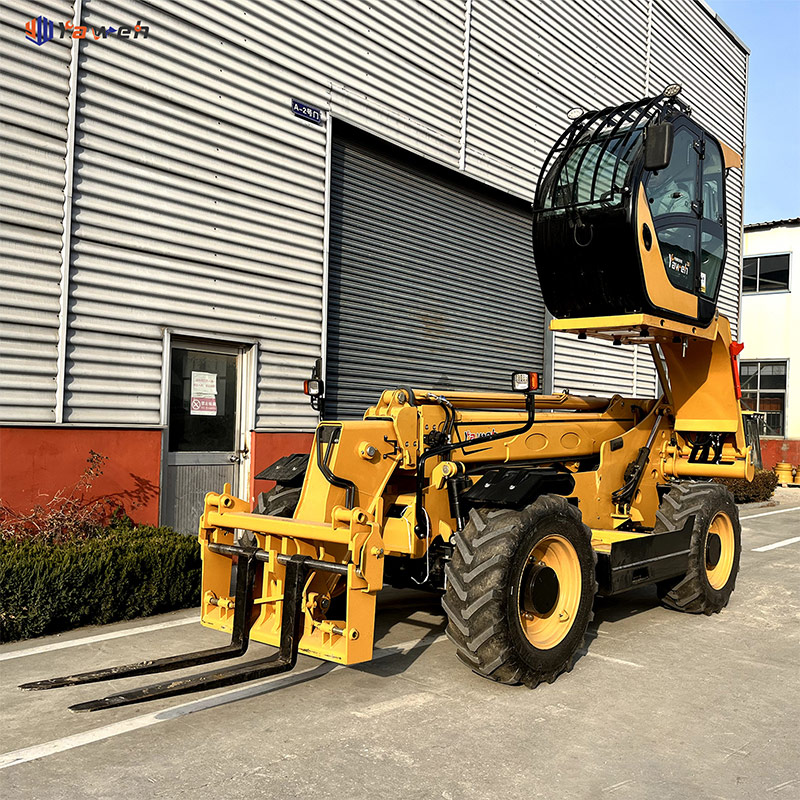
A telehandler—frequently referred to as a telescopic handler or rough-terrain forklift—is a highly versatile lifting machine. You will see them heavily utilized across the construction, agriculture, and industrial sectors. Picture a bustling commercial framing project. The ground is churned into a muddy soup from recent rains and heavy dump truck traffic. A traditional warehouse forklift would immediately sink to its axles and stall. A telehandler, however, glides right through the muck.
At its core, the machine features a telescopic boom that extends forwards and upwards from the vehicle's chassis. By swapping out front-end attachments, you can transform this single piece of equipment into a multi-functional utility vehicle.
To truly grasp lifting capacity, you have to distinguish this machine from a standard warehouse forklift. Both move palletized goods, but their engineering, operational environments, and mechanical limits are completely different.
Terrain Adaptability: Traditional forklifts are built for smooth, paved surfaces. They rely on small, solid tires and a very low center of gravity. In contrast, telehandlers are purpose-built for the wild. They feature large, pneumatic or foam-filled tires, high ground clearance, and robust four-wheel drive. This allows them to navigate mud, loose gravel, and graded dirt effortlessly.
The Mechanics of Reach: The most critical distinction lies in the boom mechanism. A standard forklift operates with a vertical mast. It only lifts loads straight up and down. Conversely, a telehandler utilizes a boom that lifts loads vertically and horizontally. In the industry, we call this horizontal extension "forward reach."
Why Forward Reach Matters: This dual-axis movement fundamentally changes how you calculate lifting capacity. With a vertical mast forklift, the load stays securely close to the machine's center of gravity. Extending a telehandler boom forward, however, shifts the load's center of gravity away from the tipping axis (the front wheels). The further you push that load forward, the less weight the machine can safely support without tipping over.
Telehandlers are categorized into distinct capacity classes. These classes are based on the machine's maximum lifting capability when the boom is fully retracted. Understanding these industry-standard weight classes helps you identify the exact category for your specific job site needs.
Compact telehandlers typically lift between 2,500 and 5,500 lbs. Engineers designed these machines for tight workspaces, residential construction, and agricultural tasks. Here, maneuverability takes priority over extreme heavy lifting.
Moving slightly up the scale, a 3.5 Ton Telehandler represents the absolute "sweet spot" for general material handling. Offering roughly 7,700 lbs of capacity, this class provides an optimal balance between physical footprint and raw lifting strength. It is robust enough to lift standard pallets of bricks or structural steel, yet nimble enough to navigate congested commercial sites using crab-steering functions.
The standard construction class encompasses machines lifting between 8,000 and 12,000 lbs. These are the workhorses you see on almost every mid-to-large-scale commercial site.
Machines in this category handle the grueling demands of daily material distribution. Operators routinely use them to unload flatbed trucks, move massive concrete blocks, and hoist heavy structural components to third-story staging areas. Their heavy-duty chassis and powerful hydraulic systems provide the rock-solid stability required for continuous operation.
For industrial applications that dwarf standard construction limits, the Heavy Duty Telehandler enters the equation. These high-capacity beasts are engineered to lift anywhere from 15,000 lbs up to—and in specialized cases exceeding—100,000 lbs.
You will find heavy-duty models heavily utilized in mining operations, large-scale infrastructure, and pipe-laying. In many scenarios, these massive machines actually replace smaller mobile cranes. Because they require less setup time and can physically transport the load across the site, they offer a highly efficient solution for moving massive components.
Industry Trend Analysis: If you look at recent equipment manufacturing news and market dynamics, there is a clear trend reshaping lifting capacities. Site managers are demanding more muscle in smaller packages. With urban job sites shrinking, the old method of bringing in a massive, stationary mobile crane is becoming cost-prohibitive. Manufacturers are responding by engineering high-capacity telehandlers with surprisingly tight turning radii. Furthermore, we are seeing a massive push toward integrated telematics and advanced Load Moment Indicators (LMI). These digital systems actively monitor the load's weight and boom angle in real-time, physically preventing the operator from accidentally pushing the machine past its tipping point.
The absolute most critical safety protocol in telehandler operation is strict adherence to the load chart. The bold "maximum capacity" painted on the side of the machine is only valid under highly specific conditions. Typically, that means the boom is fully retracted, and the chassis rests on perfectly level ground.
To operate safely, you must respect the physics of the machine. Think of the telehandler as a giant seesaw. The front axle serves as the pivot point (fulcrum). The machine's heavy rear end, packed with the engine and solid cast-iron counterweights, provides the downward force to keep the equipment grounded.
As you extend the boom outward, increasing forward reach, the load moves further away from that pivot point. This shift drastically increases the leverage the load has against your machine's counterweight. Consequently, your lifting capacity drops off a cliff. For example, a standard 10,000 lb capacity machine can safely lift its max load when retracted. But if you extend that boom to a 30-foot forward reach, the safe lifting capacity might plummet to just 2,000 lbs. Attempting to lift more than the chart allows at that extension will instantly lift the rear wheels off the ground, causing a catastrophic forward tip-over.
Every telehandler has a specific load chart permanently mounted in the operator's cab. Reading this chart is your operational bible. It is usually laid out as a grid or a series of intersecting colored arcs.
Identify the Boom Angle: The left side or the curved lines indicate the boom's angle in degrees (e.g., 20°, 40°, 60°). Check the inclinometer in the cab to find your current angle.
Identify the Boom Extension: The top or horizontal axis shows the extension distance. You can usually see visible letters or color codes painted directly on the boom itself (like Zone A, B, C).
Find the Intersection: Match your current boom angle with the current boom extension. That specific grid square dictates the absolute maximum safe weight for your exact configuration.
For certain architectural projects, extreme vertical elevation is more important than raw lifting power. This is exactly where a specialized long reach telehandler becomes a mandatory asset.
Standard construction models generally offer maximum lift heights between 19 and 55 feet. That is perfectly fine for two- to four-story commercial structures. However, a long-reach model features a multi-stage boom designed to shatter those limits. These specialized machines can achieve vertical lift heights of 70 to 80 feet, and sometimes even higher. Crews rely on them heavily for high-rise framing, multi-story roofing, and complex bridge construction.
You can't cheat physics. You cannot maximize both height and weight simultaneously without making the machine impossibly large. A long-reach telehandler deliberately trades maximum weight capacity for exceptional vertical elevation.
When you lift a load 70 feet into the air, the machine's center of gravity rises drastically, reducing lateral stability. Wind resistance also becomes a highly dangerous factor at those altitudes. To safely achieve these elevations, long-reach models almost always feature front outriggers. When deployed, these heavy steel stabilizers widen the machine's footprint. They shift the fulcrum point further forward, restoring a portion of the lifting capacity and providing the rigid stability needed to place materials safely at altitude.
The manufacturer's load chart gives you a baseline. But a telehandler does not operate in a vacuum. Real-world job site conditions introduce dynamic variables that drastically alter how much you can actually lift.
A machine’s true value stems from its ability to swap front-end attachments. Common tools include standard forks, material buckets, lifting jibs, truss booms, and personnel work platforms. However, there is a fundamental rule operators often forget: the weight of the attachment itself directly subtracts from your total payload capacity.
If your machine is rated to lift 8,000 lbs at a specific extension, and you attach a 1,200 lb general-purpose bucket, your actual payload capacity for dirt or gravel instantly drops to 6,800 lbs. Specifically, attachments that push the load's center of gravity further away from the carriage—like a jib crane—will alter the load chart calculations entirely. You must consult a specific chart for that exact attachment.
Engineers meticulously calibrate load charts assuming the machine is parked on firm, perfectly level ground. Real-world construction sites rarely offer such pristine conditions. Imagine trying to hoist a two-ton steel beam while parked on a muddy, 5-degree incline. Sloping terrain violently alters the machine's center of gravity. Lifting on an incline slashes your safe lifting limits and exponentially increases the risk of lateral tip-overs.
Soft or muddy terrain can cause one side of the machine to sink under a heavy load, instantly destabilizing the equipment. Proper tire selection is vital here. Foam-filled tires add essential counterweight to the base of the machine and completely eliminate the risk of a blowout under heavy loads. As mentioned earlier, outriggers are game-changers. By deploying front stabilizers, you bypass the front tires entirely. You transfer the load directly into the solid earth, massively increasing both capacity and safety.
Procuring the right equipment requires a data-driven approach, not guesswork. Overestimating your needs burns unnecessary capital and fuel. Underestimating leads to severe safety hazards and stalled operations.
The most common rookie mistake is selecting a machine based solely on the maximum weight of the material. In telescopic lifting, distance is just as critical as mass. You must calculate the exact horizontal distance from your front tires to the placement zone.
If your heaviest load is a 4,000 lb pallet of stone, a 5,500 lb capacity machine seems sufficient at first glance. But what if you need to place that 4,000 lb pallet 15 feet across an open trench? The load chart of a 5,500 lb machine will absolutely not support that forward reach. You might actually need a 10,000 lb capacity machine just to safely place a 4,000 lb load at a 15-foot extension. As an industry best practice, never plan to operate a machine at 100% of its rated capacity. Always build in a 15% to 20% safety weight buffer for unexpected variables.
Always balance raw lifting capacity against the physical constraints of your site. A massive 15,000 lb capacity machine might easily handle all your heavy lifting. But its wide wheelbase, heavy ground pressure, and massive turning radius render it useless if it cannot fit through access gates or navigate congested urban alleys. In tight environments, a highly maneuverable mid-size unit often yields better overall productivity than forcing a cumbersome machine into a space it wasn't designed for.
Once you define the exact technical specs required for your workflow, the final step is procurement. Whether you are expanding a rental fleet or buying a dedicated machine for your firm, evaluating the total cost of ownership is paramount.
Deciding between new and pre-owned machinery comes down to your projected utilization rate and available capital. Buying new guarantees access to the latest tech. This includes modern safety load-sensors, automated stability control systems, and highly efficient engines. New equipment also carries comprehensive warranties, effectively minimizing unexpected downtime costs.
In contrast, the used market offers massive upfront cost savings. For contractors with lower utilization rates, late-model used machines provide an excellent return on investment. Just ensure you conduct rigorous field inspections. Evaluate hydraulic cylinder integrity, check the boom wear pads, and verify the maintenance history before signing the check.
Whether you buy new or used, the equipment is only as reliable as the support network standing behind it. When searching for a telescopic handler for sale, prioritize reputable dealers who offer comprehensive after-sales support. Ensure they maintain a robust local inventory of OEM parts and employ certified technicians for rapid field service. A strong dealer partnership guarantees your machine remains OSHA-compliant and operates at peak capacity for years to come.
Ultimately, a telehandler is an indispensable lifting machine that perfectly bridges the gap between a traditional forklift and a mobile crane. However, its true lifting power is dynamically tied to your specific operational conditions. By thoroughly understanding capacity classes, accurately reading load charts, and matching machine specs to the physical realities of your job site, you maximize productivity while keeping your crew safe. Always prioritize reach and working environments over raw weight alone, and you will secure the perfect machine for your material handling needs.
Generally, yes. Standard industrial forklifts are engineered to lift between 3,000 and 15,000 lbs vertically on flat, paved concrete. Telehandlers cover a much broader and heavier spectrum. While compact models start around 2,500 lbs, heavy-duty telehandlers can easily exceed 30,000 to 50,000 lbs. More importantly, telehandlers feature specialized drivetrains designed to transport these massive loads across uneven, unpaved terrain—something standard forklifts simply cannot do.
Exceeding the rated capacity or extending the boom beyond the load chart limits creates an immediate, life-threatening hazard. The physical reaction is a violent shift in the center of gravity past the front axle. This causes the rear wheels to lift off the ground. If the operator does not instantly retract the boom, the machine will suffer a longitudinal tip-over. Modern equipment uses automated LMI sensors to lock out hydraulic functions before tipping occurs, but relying solely on sensors instead of operator awareness is extremely dangerous.
Yes. Under international safety standards, including OSHA regulations in the United States (standard 1910.178 for powered industrial trucks), operators must be formally trained and certified specifically for rough terrain telescopic handlers. A standard warehouse forklift certification is not legally sufficient. The specialized training covers the unique physics of telescopic lifting, decoding complex load charts, and navigating rough terrain environments safely.
It is vital to distinguish between a machine's lifting capacity and its actual operating weight (curb weight). A 3.5-ton model is designed to lift approximately 7,700 lbs of material. To safely counterbalance that heavy load when the boom extends forward, the machine itself must be incredibly heavy. Therefore, the actual operating weight of a 3.5-ton capacity machine typically ranges between 15,000 and 18,000 lbs, depending on the chassis design and whether the tires are foam-filled.
This depends entirely on the specific make and model, but the capacity drops significantly at maximum extension. For instance, a machine rated for 10,000 lbs when fully retracted might only be able to safely lift 2,000 to 3,000 lbs when the boom is extended to its maximum forward reach of 30 or 40 feet. You must always consult the specific load chart in the cab for the exact weight limit at maximum reach.
Yes, but with strict limitations and specific attachments. By equipping the machine with a lifting jib or a truss boom, a telehandler can perform many pick-and-carry tasks traditionally reserved for small mobile cranes. However, unlike a crane, a telehandler is not designed for continuous free-hanging suspended loads that swing, which can easily destabilize the machine. Operators must use dedicated load charts for suspended loads and drive at a crawling pace to prevent tip-overs.


