
English


Views: 0 Author: Site Editor Publish Time: 2026-10-30 Origin: Site


Investing in heavy machinery goes beyond simple financial math. It is a foundational commitment. The right machine dictates the pace, safety, and efficiency of your entire operation. Conversely, choosing the wrong equipment triggers a painful chain reaction. You face costly project delays, frustrated operators, and wasted capital. The current market is flooded with endless sizes, capacities, and attachment options. Consequently, buyers frequently feel overwhelmed when browsing for a reliable telehandler for sale.
You might be managing a muddy post-storm construction site. Perhaps you oversee a sprawling agricultural operation. Or maybe you are navigating the tight aisles of an industrial warehouse. Regardless of the environment, this comprehensive guide cuts through the marketing noise. We will walk you through the exact engineering specifications needed to make an informed decision. By understanding the real-world mechanics of these machines, you can select the perfect asset for your fleet.
Capacity and Reach: Always align the maximum lift capacity and vertical height of the machine with your absolute heaviest job requirements.
Site Conditions: The ground beneath your tires dictates your drivetrain needs. Uneven, unpaved sites demand robust four-wheel-drive configurations.
Size Matters: Mid-range models offer an optimal balance of raw power and nimble maneuverability for most standard industrial tasks.
Smart Attachments: Investing in the right tools seamlessly transforms a single machine into a multi-purpose workhorse.
Total Cost of Ownership: Look beyond the sticker price. Factor in hydraulic maintenance, tire replacement, and daily fuel consumption.
The heavy equipment industry is undergoing a massive transformation. Modern fleet managers no longer look solely at raw lifting power. They demand data-driven efficiency and versatility. Recent market trends show a sharp increase in the adoption of telematics. These smart systems track engine idle times, fuel burn rates, and maintenance intervals in real time. Furthermore, stricter environmental regulations are pushing job sites toward Tier 4 Final and Stage V compliant engines. Purchasing a machine today means investing in a connected, low-emission asset that keeps your site compliant and your operating costs manageable.
Picture a commercial framing site after three days of heavy rain. You are dealing with deep ruts, slick mud, and tight deadlines. Before even looking at equipment inventory, savvy procurement officers conduct a ruthless audit of their work environment. The operational landscape directly dictates mechanical requirements. Failing to align site realities with equipment specifications inevitably leads to dangerous safety hazards.
Calculating the absolute heaviest load the machine will encounter is your foundational step. Never guess your capacity. Buyers must consult and strictly follow load charts. These charts visually map out lifting capabilities at various boom angles and extensions. Specifically, you must grasp the difference between maximum lift capacity and capacity at maximum reach. Maximum capacity is only achieved when the boom is fully retracted and elevated. Once that boom extends, the center of gravity shifts forward, and the lifting capacity drops significantly.
Lift height and forward reach solve entirely different logistical bottlenecks. Vertical lift height is essential for stacking heavy materials on multi-story scaffolding. In contrast, forward reach becomes crucial when ground obstacles prevent the machine from driving directly up to the drop-off zone. Open trenches, temporary fencing, and mud pits require serious horizontal extension.
When standard models fall short of your project demands, site managers must look toward a long reach telehandler. For example, machines engineered like the T1840 series provide a massive 18-meter lifting height and a 4000kg load capacity. These specialized units allow operators to place suspended loads with pinpoint accuracy over deep trenches, completely eliminating the need to constantly reposition a heavy chassis.
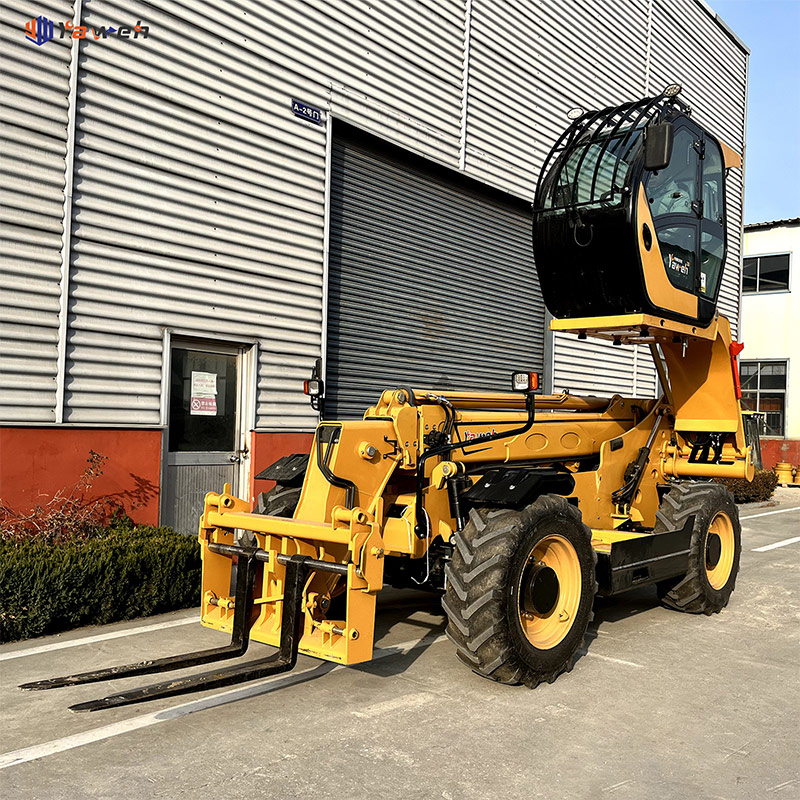
Once your environmental requirements are firmly established, you must dive into the hard numbers. Ensuring the selected machine can perform reliably under grueling stress prevents costly procurement errors. We have built a quick reference matrix to help you match machine categories to your specific site.
| Job Site Type | Recommended Category | Key Specification Focus | Example Application |
|---|---|---|---|
| Congested Urban Lots | Compact / Mid-Range | Tight turning radius, Crab steer | Residential framing, masonry |
| Muddy / Unpaved Fields | Rough Terrain | High ground clearance, 4WD, Deep treads | Agriculture, early-stage earthworks |
| Multi-Story Commercial | Long Reach | Maximum lift height, Frame leveling | Roofing, bridge maintenance |
Engine horsepower dictates the ability to tow heavy loads and power through deep mud without stalling. Equally critical is the hydraulic flow rate. The hydraulic system is the lifeblood of the boom and attachment functions. A higher flow rate guarantees smoother boom operation. It is absolutely vital if you plan to operate hydraulically driven attachments like sweeper brooms or earth augers.
A machine might boast massive lifting capacity, but its practical utility drops to zero if the physical footprint is too bulky. Buyers must physically measure the narrowest gates and standard bay doors the equipment will pass through. Additionally, turning radius is a make-or-break specification. Machines equipped with three steering modes—front-wheel, all-wheel, and crab steer—offer the tightest maneuvering capabilities. Crab steer allows operators to slide diagonally away from walls in highly constrained spaces.
Navigating the equipment market requires matching specific machine architectures to your exact job site parameters. You should never shop purely by brand color. Focus on the engineering.
The mid-weight class represents the gold standard for residential construction and mid-sized commercial framing. These machines offer a highly efficient balance between raw lifting power and a manageable physical footprint. For instance, a reliable 3.5 Ton Telehandler like the T935 model delivers a 3500kg lifting capacity alongside a 9.5-meter lifting height. Powered by a robust 74kW engine, it provides ample muscle to hoist heavy pallets of bricks while maintaining a chassis compact enough to weave through congested suburban lots.
Job sites rarely feature perfectly level concrete. For deeply rutted or heavily sloped environments, specialized engineering is mandatory to maintain traction and load stability. A dedicated Rough Terrain Telehandler is built specifically for this brutality. Models like the T735 combine a 3500kg capacity with a 7-meter reach, utilizing aggressive deep-tread tires and heavy-duty planetary axles. Advanced four-wheel-drive systems ensure the machine pushes through loose gravel and deep mud without bogging down.
Fundamentally, this equipment is a high-powered tool carrier. The machine provides the hydraulic muscle, but the attachment at the end of the boom dictates its actual utility. Selecting the appropriate tools effectively transforms a single piece of equipment into a versatile fleet.
The most frequently utilized attachments fall into three primary categories. Pallet forks are the undisputed industry standard for moving lumber and blocks. Floating forks are highly recommended for uneven terrain, as they independently adjust to keep the load level over bumps. Material handling buckets allow the machine to lift loose gravel or sand over high retaining walls. Finally, lifting jibs are critical for suspended loads like roof trusses. However, operators must strictly adhere to suspended load charts, as swinging materials drastically alter machine stability.
Swapping heavy attachments manually often means pounding out stubborn pins with a sledgehammer while the clock ticks. A hydraulic quick-attach system eliminates this headache. It allows the operator to switch between a bucket and a set of forks in seconds from the safety of the cab. This mechanism drastically reduces downtime and keeps the site moving efficiently.
For bottom-of-funnel buyers, the decision between purchasing fresh off the assembly line or navigating the secondary market is a major financial hurdle. Both avenues present distinct advantages.
Acquiring a used machine slashes initial capital expenditure, but it shifts the mechanical risk entirely onto the buyer. A rigorous engineering audit is mandatory. First, fully extend the boom to inspect the nylon wear pads. Excessive gaps indicate poor maintenance. Next, scrutinize all structural welds for hairline cracks. Examine exposed cylinder rods for scoring or pitting. A sluggish response when lifting a test load often points to a dying hydraulic pump. Always demand comprehensive maintenance records. Consistent oil changes are the strongest indicators of remaining lifespan.
Evaluating the sticker price on the dealer lot is only the first step. To ensure a profitable investment, buyers must calculate the Total Cost of Ownership. This encompasses daily operating expenses, routine maintenance, and eventual resale value.
Heavy machinery demands strict adherence to preventive maintenance schedules. Your calculations must include the cost of daily consumables like diesel and exhaust fluid. Tires represent one of the highest recurring expenses. Aggressive terrain will chew through specialized rubber rapidly. Furthermore, the proximity and responsiveness of your equipment dealer are just as critical as the machine specs. Partner with manufacturers that guarantee rapid parts availability to minimize site downtime.
Choosing the right machine is a strategic engineering process. It requires careful planning and a deep understanding of your daily operational hurdles. You must accurately calculate your maximum load requirements, anticipate your highest vertical reaches, and honestly assess your ground conditions. By meticulously matching technical specifications to your real-world needs, you ensure a strong return on investment and a safer work environment. Stop relying on guesswork. Review your site parameters, explore the robust lineup at Yaweh machinery, and let hard data drive your final purchasing decision.
While both machines move heavy materials, their engineering differs drastically. A traditional forklift utilizes a vertical mast. This limits its movement strictly to up-and-down lifting. Forklifts are generally designed for smooth warehouse floors. In contrast, a telescoping boom extends forwards and upwards, allowing it to reach over obstacles. Built on robust four-wheel-drive chassis, they excel in rough, unpaved environments.
Yes, operating this machinery requires specific training and certification due to the complex load dynamics involved. Safety organizations require operators to be certified specifically for rough terrain forklift trucks. Operators must undergo practical evaluation to master load charts, center of gravity principles, and safe operating procedures on uneven ground.
Pricing varies widely based on brand, region, cab options, and included technology. Brand-new machines in this weight class generally range from $75,000 to $110,000 USD. Used models with 2,000 to 4,000 operational hours typically sell for $40,000 to $65,000 USD. Always factor in freight costs and initial maintenance when budgeting for used equipment.
The machine can lift suspended loads when equipped with an approved lifting jib or winch attachment. However, it is not a true crane and operates under entirely different physical constraints. Suspended materials swing, dynamically shifting the center of gravity and increasing tipping risks. Operators must strictly adhere to specific load charts for suspended loads.
Standard construction models typically offer maximum lift heights between 5 to 6 meters. Specialized long-reach variants designed for multi-story framing and commercial roofing can achieve vertical reaches of 14 to 18 meters. Operating at these extreme heights requires highly specialized training and strict ground-bearing pressure evaluations.
Lift capacities vary heavily by class. Compact models typically lift between 1,800kg to 2,500kg. Mid-range workhorses commonly handle 3,500kg to 4,000kg. Heavy-duty industrial models can hoist upwards of 5,400kg to 9,000kg. Always remember that maximum capacity is only viable when the boom is fully retracted.
With rigorous preventive maintenance, a quality machine will reliably operate for 8,000 to 10,000 hours before requiring major engine or hydraulic overhauls. In a typical construction setting, this translates to roughly 10 to 12 years of service. Neglecting hydraulic fluid changes and boom greasing will drastically cut this lifespan in half.


