
English


Views: 0 Author: Site Editor Publish Time: 2026-05-11 Origin: Site


Selecting an improperly sized mini excavator compromises project margins, causes irreversible site damage, and creates costly transport logistical hurdles. Equipment operators and general contractors frequently base their procurement decisions purely on engine horsepower and maximum digging depth. They over-spec for power without calculating overhead clearances, track footprints, or transport towing limits. This mismatch leads to immediate operational inefficiencies, escalating fuel burn rates, and completely unnecessary heavy-hauling fees.
To maximize return on investment, contractors must implement a definitive, data-driven framework before acquiring heavy equipment. Evaluating ground bearing pressure, bucket breakout force, physical dimensional limits, and working ranges ensures the machinery precisely matches the application. Sizing equipment accurately mitigates Total Cost of Ownership (TCO) inflation and keeps projects on schedule. This technical selection guide establishes the exact parameters necessary to evaluate access restrictions, soil density, and attachment limits, ensuring your next machinery investment or rental aligns flawlessly with real-world site realities.
Size Dictates Access: Micro excavators (<1 ton) clear standard 36-inch gates, while 5-10 ton machines require commercial hauling permits.
Specs Over Aesthetics: Machine selection must prioritize bucket breakout force, material density (load weight vs. bucket volume), and maximum dump height over brand preference alone.
Configuration is Critical: Standard arms offer higher breakout force, long arms prioritize reach, and extendable arms provide hybrid versatility.
TCO Principle: The industry standard for maximizing ROI—whether looking for a mini excavator for sale or evaluating rental fleets—is to source the smallest capable machine to minimize fuel burn, ground disturbance, and transport overhead.
Before analyzing machine specifications, project managers must establish a foundational understanding of their operational constraints. Equipment capacity means nothing if the machine cannot physically access the excavation zone or legally travel to the job site over municipal roads. Project managers must map out these non-negotiable constraints step-by-step to narrow down initial equipment parameters.
Site Layout & Access: Measure the narrowest choke points along the entire path of travel from the unloading zone to the dig site. Standard residential side gates generally measure exactly 36 inches across. If your equipment measures 39 inches, you face the immediate cost of fence dismantling and reinstallation. Evaluate overhead obstacles thoroughly. Low-hanging
powerlines, roof eaves, dense tree canopies, and commercial parking garage doors dictate whether you can utilize a fully enclosed climate-controlled cab or if you require an open-station unit with a foldable roll-over protection structure (ROPS).
Terrain & Ground Conditions: Differentiate between finished surfaces and rugged, undeveloped grades. Operating machinery over cured concrete, fresh asphalt, or mature landscaping demands a machine engineered for minimal ground bearing pressure. Finished surfaces require low PSI (pounds per square inch) configurations and premium rubber tracks to prevent structural cracking or turf tearing. Deep mud, uneven terrain, and steep rocky slopes necessitate heavier machines equipped with aggressive steel tracks to maintain traction and prevent hazardous lateral rollovers.
Project Scope & Soil Hardness: Determine the peak structural limits of the intended excavation. Identify the maximum required dig depth, such as reaching deep municipal sewer tie-ins versus cutting shallow irrigation trenches. Note peak lift capacity needs for dropping in heavy concrete utility boxes or manholes. Soil composition radically alters hydraulic requirements. Moving loose topsoil requires significantly less bucket breakout force than fracturing compacted red clay, breaking through a deep winter frost line, or extracting mature hardwood tree roots. High-density materials demand heavier machines with specialized auxiliary hydraulic circuits.
Transport Capabilities: Assess your current towing logistics. The base operating weight of the machine is only one variable. You must calculate the Gross Combined Weight Rating (GCWR). This metric includes the curb weight of the heavy-duty tow vehicle, the maximum payload capacity of the step-deck or tilt trailer, the machine itself fully loaded with fluids, and any heavy steel attachments bolted to the trailer deck. Exceeding specific weight thresholds triggers federal Department of Transportation (DOT) commercial hauling regulations, requiring a Commercial Driver’s License (CDL), specialized tie-down chains, and commercial insurance policies.
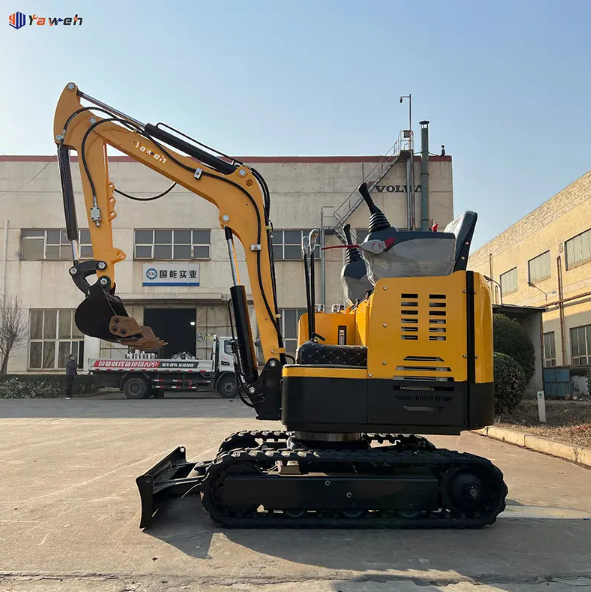
Establishing exactly how operating weight translates to digging capability and site stability forms the core of equipment selection. Physical mass acts as the primary counterweight against the digging force applied at the bucket teeth. Without sufficient machine weight, the chassis will simply tip forward under heavy loads instead of breaking through the soil. Consulting a reliable mini excavator size chart illustrates the direct, mechanical correlation between engine horsepower, structural mass, and hydraulic performance.
| Weight Class | Operating Weight | Engine Power | Typical Dig Depth | Primary Application |
|---|---|---|---|---|
| Under 1 Ton | 800 – 1,999 lbs | 10 – 15 HP | 5 – 6 feet | Indoor demolition, turf planting, backyard irrigation |
| 1 to 2 Tons | 2,000 – 4,000 lbs | 13 – 17 HP | 7 – 8 feet | Urban utility repair, residential trenches, patio prep |
| 3 to 5 Tons | 6,000 – 10,000 lbs | 23 – 48 HP | 8 – 12 feet | Farming operations, pool installations, commercial foundations |
| 6 to 10 Tons | 12,000 – 20,000 lbs | 55 – 70 HP | 12 – 15 feet | Deep sewer lines, heavy commercial utility, rock breaking |
Machines in the micro category operate strictly between 800 and 1,999 lbs, utilizing compact, high-efficiency engines generating 10 to 15 horsepower. They offer a typical maximum dig depth of 5 to 6 feet depending on arm configuration. This weight tier represents the ideal mini excavator for landscaping, planting small caliper trees, executing DIY backyard trenching for PVC irrigation lines, and handling interior commercial demolition where the unit must physically track through standard interior office doors.
The overriding engineering advantage for micro units is minimal ground disturbance. These ultra-light units exert roughly 3.5 to 4.5 psi of ground pressure. Because the rubber tracks distribute the machine's static weight over a long surface area, this pressure effectively registers lower than an average adult human walking. Operators can track directly over finished turf, delicate paver stones, and residential concrete sidewalks without causing aesthetic damage or sub-base cracking.
Operating between 2,000 and 4,000 lbs, compact utility machines generate 13 to 17 horsepower and achieve digging depths of 7 to 8 feet. This specific class operates as the definitive mini excavator for urban construction, narrow-alley municipal utility repairs, residential hot tub electrical installations, and minor stump removals. They seamlessly bridge the gap between restricted backyard access constraints and serious commercial earthmoving capabilities.
Logistically, the 1-to-2-ton class represents the absolute maximum footprint generally towable behind a standard 3/4-ton heavy-duty pickup truck without legally requiring a CDL or a specialized commercial step-deck trailer. Keeping the transport weight below local DOT thresholds eliminates complex transport logistics, making this size incredibly popular for independent plumbing contractors, electricians, and property owners renting equipment for weekend development projects.
Scaling up to 6,000–10,000 lbs with engines producing 23–48 horsepower, this mid-range class introduces digging depths of 8 to 12 feet. It also marks the starting point where manufacturers commonly introduce fully enclosed, climate-controlled cabs, dramatically improving operator comfort and focus during long shifts in extreme summer heat or freezing winter weather. This robust profile creates a highly efficient mini excavator for farming operations, clearing brush, commercial utility trenching, placing structural concrete footings, and digging residential swimming pools.
This mid-range tier universally functions as the most versatile asset for general contractors. It strikes an optimal mechanical balance, providing significant bucket breakout force to chew through dense rocky soil while maintaining a chassis footprint agile enough to maneuver around established structural building foundations and existing hardscapes without requiring road closures.
The heavy-duty class spans an impressive 12,000 to 20,000 lbs, commands 55 to 70 horsepower, and easily achieves vertical dig depths up to 15 feet. Manufacturers position this equipment primarily as a highly capable small excavator for municipal projects, deep commercial sewer installations, lifting heavy trench boxes, and dense rock clearing operations along roadside embankments.
This massive weight class actively replaces the need for a full-sized standard excavator or a cumbersome backhoe loader in space-constrained roadside environments. The evaluation dimension shifts heavily toward operational logistics when selecting a 10-ton machine. Moving these units demands dedicated heavy commercial transport, dual-axle lowboy trailers, air-brake equipped tow vehicles, and often requires specific DOT transport permits depending on regional highway weight-per-axle regulations.
Engine power and hydraulic digging depth mean absolutely nothing if the machinery cannot physically reach the operational zone. Urban infill projects, densely packed residential backyards, and complicated indoor demolition sites present unique spatial challenges that mandate highly specific chassis configurations and retractable track technology.
Evaluating physical machine footprints serves as the first mandatory step in urban site planning. Passing safely through a standard residential perimeter gate requires a mini excavator width strictly under 36 inches. A machine footprint even a fraction of an inch over this hard limit necessitates unbolting and dismantling fencing, adding hours of labor and material replacement costs to the project budget.
To solve this fundamental access problem, manufacturers engineer retractable undercarriages on their micro units. Using an auxiliary hydraulic switch, the operator pulls the tracks inward to slim the machine's profile, sometimes narrowing the width from 39 inches down to just 28 inches. This allows the equipment to navigate tight doorways, interior hallways, and alleyways. Once positioned safely in the open work zone, the operator expands the tracks fully outward. This wide, stable stance re-establishes the machine's center of gravity, delivering critical digging stability and actively preventing lateral rollovers when swinging heavy loads of wet material over the side of the tracks.
Confined operating spaces require meticulous attention to the machine's tail swing profile. Traditional conventional tail swing machines feature a heavy cast-iron rear counterweight that protrudes far beyond the steel track width when rotating. In tight urban lots or against retaining walls, this geometry creates a severe collision risk against structural walls, parked vehicles, or passing pedestrians. Zero Tail Swing (ZTS) and Compact Radius (CR) designs mitigate this hazard entirely.
ZTS models keep the entire upper engine housing and cast-iron counterweight completely within the established track footprint during a full 360-degree rotation. This engineering feat allows operators to work flush against concrete walls without constantly checking their blind spots. Furthermore, operational height limitations demand attention in accordance with OSHA safety guidelines regarding powerlines. Moving equipment under live high-voltage lines, bridges, or into subterranean parking garages requires strict vertical clearance measurements. Low-profile canopies and foldable ROPS bars accommodate low-clearance environments effortlessly, contrasting with fully enclosed glass cabs that restrict access in vertically constrained work zones.
Understanding the deep mechanical interplay between digging boom geometry, hydraulic cylinder force, and raw material density separates amateur weekend operators from professional earthmovers. Specifications must be read relative to the exact soil materials you intend to process on site.
Buyers routinely confuse digging parameters and operational ranges. Reaching the bottom of a utility trench represents your maximum Dig Depth. Extracting that dirt is only the initial half of the mechanical process; you must also dispose of it efficiently. Dumping Height refers to the specific vertical clearance required to lift and load excavated material directly into high-sided tandem dump trucks, towering roll-off dumpsters, or large agricultural manure spreaders.
Manufacturer nuances dictate these dimensions heavily. Certain machine geometries feature class-leading dump heights due to customized boom pin placements, whereas alternative brand configurations prioritize maximizing straight vertical dig depth within the exact same weight class. For highly complex spatial requirements, contractors should specify machines equipped with a Variable Angle Boom (VAB). This advanced two-piece boom articulates near the main chassis, allowing operators to dig aggressively closer to the machine's tracks and lift loads significantly higher in vertically restricted overhead spaces.
Bucket Breakout Force dictates the machine's raw hydraulic capability to fracture highly compacted structural soil, rip up aged asphalt layers, or punch through deep winter frost lines. High horsepower engines paired with large-diameter hydraulic cylinders deliver the focused ripping power necessary for heavy excavation through a narrow bucket tooth.
Operators must employ strict risk-mitigation regarding material characteristics. You must differentiate precisely between load capacity (the physical cubic volume of the steel bucket) and load weight (the actual density of the excavated material). A full cubic yard of dry, loose topsoil weighs significantly less than a full cubic yard of saturated, wet clay or dense crushed limestone. A machine stretched to its maximum horizontal reach can easily tip forward over the blade if lifting dense, wet clay, even if the bucket volume appears visually appropriate. Always consult the manufacturer's specific load chart located in the cab, which calculates safe lifting limits dynamically based on boom extension length and track orientation.
Evaluating mini excavator sizes and weights cannot happen in a vacuum; the heavy attachments deployed on the end of the boom drastically alter the machine's operating parameters. The physical mass of these heavy steel tools inherently reduces the machine’s Safe Working Load (SWL).
| Attachment Type | Baseline Weight Range | Impact on Machine Stability & Hydraulics |
|---|---|---|
| Standard Trenching Buckets | 100 – 500 lbs | Minimal impact; factory factored into standard OEM lift charts. |
| Hydraulic Earth Augers | 150 – 400 lbs | Creates swinging momentum; requires two-way flow and slow boom operations. |
| Hydraulic Rock Breakers | 300 – 1,500 lbs | Heavy frontal mass; significantly reduces forward tipping threshold over the blade. |
| Vibratory Plate Compactors | 500 – 1,200 lbs | High vibration and heavy weight require careful boom extension management. |
| Forestry Mulchers / Brush Cutters | 600 – 1,400 lbs | Demands continuous high-flow auxiliary hydraulics; requires heavy rear counterweight. |
When utilizing continuous high-flow hydraulic attachments—such as heavy rock breakers, flail mowers, or forestry mulchers—the machine's center of gravity shifts dangerously forward. To maintain structural stability, contractors often require supplementary bolt-on counterweight configurations added to the rear cast iron of the machine. Failing to account for attachment weight when calculating total operational load limits results in sluggish, overheated hydraulic performance, accelerated undercarriage wear, and severe forward tipping hazards.
Once the baseline weight class is established, buyers must select highly specific chassis styles and mechanical arm configurations. Every mechanical choice involves a direct trade-off between ripping power, vertical reach, and site preservation.
While standard configurations utilize rubber or steel tracks, briefly contrasting them with wheeled excavators frames the actual boundaries of track applications. Wheeled excavators excel in rapid urban mobility projects. They can drive under their own power on public asphalt between closely clustered utility job sites without requiring constant loading and unloading from a trailer. However, wheeled units surrender significant traction in deep mud and lack the extremely low ground-bearing pressure provided by long tracks. Additionally, suction/vacuum excavators provide non-destructive utility digging utilizing high-pressure water and vacuums. This remains an essential alternative when navigating dense, fragile underground utility grids where mechanical steel buckets risk slicing critical fiber-optic cables or rupturing high-pressure gas mains.
The undercarriage connection to the earth directly dictates machine longevity and localized site damage. Rubber tracks provide superior structural vibration dampening, ensuring a much smoother ride for the operator over long shifts. More importantly, they protect finished stamped concrete, pristine residential driveways, and fresh asphalt from deep, permanent scarring during rotation.
Solid steel tracks deliver absolute maximum durability. They remain strictly essential for rocky, abrasive, or highly uneven municipal demolition terrain where sharp rebar, crushed concrete, and jagged rocks would quickly shred standard rubber belts. For contractors requiring daily versatility, hybrid options exist: steel tracks fitted with heavy-duty bolt-on rubber pads. This specific configuration allows operators to tackle rugged demolition sites and then transition directly onto finished municipal streets without wasting hours swapping out the entire heavy undercarriage assembly.
The physics of heavy excavation revolve around leverage and fulcrum points. Standard arms provide the absolute maximum breakout force. Because the bucket fulcrum sits closer to the main chassis, the hydraulic cylinders maximize their geometric ripping power, making standard arms best for pulling through hard rock layers and highly compacted clay.
Long-arm options extend your horizontal reach and vertical digging depth. This mechanical advantage reduces the need to frequently reposition the heavy chassis, saving considerable time on long, straight utility trenches. However, the basic laws of physics dictate that pushing the lever further out exponentially reduces the heavy-lift capacity at the bucket. Extendable arms (often telescoping configurations inside the stick) offer a premier hybrid solution. The operator retracts the arm inward for maximum ripping power through hard soil, and extends it outward for deep-trench reach or high dumping clearances.
The front-mounted steel push blade actively stabilizes the machine during deep digging and facilitates rapid site grading. Straight blades remain fixed in position, proving best for basic backfilling of trenches and providing a rigid, unmoving anchor for the front tracks. Angle blades offer active mechanical articulation, allowing the operator to pitch the blade left or right via joystick control. Angle configurations prove vastly superior for precision grading, cutting drainage swales, and drastically reducing windrowing time, as loose material rolls cleanly off the side of the angled blade rather than piling up heavily directly in front of the tracks.
Understanding the financial and logistical side of heavy equipment acquisition prevents massive budget overruns. Whether renting for a weekend or purchasing a fleet outright, interpreting the market terminology is crucial for calculating an accurate Total Cost of Ownership.
Equipment rental yards and heavy machinery dealers often utilize distinct class codes that confuse first-time operators. Translating common rental fleet terminology bridges the gap between engineering spec sheets and procurement. A "Class 17" or "Class 18" rental code roughly equates to a 1.7 to 1.8-ton machine. "Class 30" or "Class 35" signifies the 3 to 3.5-ton operating range. A "Class 80" or "Class 85" code represents heavy machines bordering 8.5 tons, which many rental facilities categorize simply as "standard excavators" rather than minis due to their immense footprint.
Financial context drives these categories heavily. Smaller units (2,000-4,000 lbs) typically cost significantly less per day or week to rent, require far less diesel per hour, and reduce third-party transport fees compared to moving 18,000+ lb commercial units. Buyers must clearly differentiate between Dry Hire (renting the machine alone, assuming all liability, fueling it, and providing your own certified operator) and Wet Hire (renting the machine alongside an insured, specialized operator). Wet hire makes immediate financial sense for complex, high-risk deep trenching near buried utilities where amateur operational mistakes could cause catastrophic, multi-million-dollar site damage.
The global push for commercial decarbonization has introduced battery-electric mini excavators into the heavy equipment market. Assessing when a battery-electric model is required relies heavily on municipal environmental regulations. EV models remain strictly required for deep indoor demolition projects lacking diesel exhaust ventilation, subterranean tunnel work, strict zero-emission urban zones, or hospital renovations where heavy diesel noise and carbon emissions cannot be tolerated around patients.
Contractors must also compare mini excavators against alternatives like Skid Steers (Compact Track Loaders) and traditional Backhoes. While backhoes provide excellent high-speed roading capabilities and can drive on municipal streets between sites without trailers, mini excavators offer vastly superior 360-degree trenching efficiency. The mechanical ability to rotate continuously while keeping the heavy undercarriage perfectly stationary grants the mini excavator a much smaller, safer operational footprint in highly congested traffic zones.
Base the final equipment sizing decision on a strict, unyielding evaluation checklist: your maximum required vertical dig depth, the narrowest physical access point on the property, the exact density of the soil you intend to fracture, and the legal DOT limits of your transport capabilities.
Always default to the core shortlisting rule: source the absolute smallest machine size mechanically capable of safely hitting the peak required specifications for your project. Oversizing machinery inflates daily fuel burn, necessitates expensive commercial transport logistics, and drastically increases the likelihood of localized ground surface damage. By rightsizing the equipment, contractors lock in predictable, highly profitable operational costs.
For prospective buyers sourcing a mini excavator for sale, adhere to these immediate, action-oriented next steps to finalize your acquisition:
Insist on an on-site physical demonstration under real working conditions rather than relying solely on glossy manufacturer brochures or spec sheets.
Test the auxiliary hydraulic response and pilot joystick control precision under an actual heavy load to accurately gauge operator fatigue over a simulated shift.
Verify the machine's tipping point and structural stability by performing a full 360-degree boom swing while fully loaded at ground level.
Review the tow vehicle's exact Gross Combined Weight Rating (GCWR) against the machine's operating weight to ensure strict legal DOT compliance before signing any purchase agreements.
A: Lift capacity depends dynamically on track orientation and boom extension. A standard 3-ton unit can typically lift between 1,500 and 2,500 lbs when positioned close to the undercarriage with the blade down. Lifting over the side of the tracks, utilizing a long-arm variant, or extending the boom horizontally reduces this lifting capacity drastically due to leverage physics.
A: It depends entirely on the combined weight. Standard drivers can tow 1-to-2-ton units behind heavy-duty pickups. However, units combined with heavy trailers and trucks that exceed a Gross Combined Weight Rating (GCWR) of 26,000 lbs—or often just 10,000 lbs in commercial capacities depending on state laws—trigger commercial DOT requirements and mandate a CDL.
A: Micro excavators generally weigh under 1 ton (approx. 2,000 lbs) and feature engines under 15 horsepower. They are specifically engineered with retractable track systems to squeeze through standard 36-inch residential doorways. Mini excavators range from 1 to 10 tons, offer larger enclosed cabs, and tackle heavy civil construction rather than localized indoor or backyard tasks.
A: Use the standard industry formula: (Cycle time × Bucket volume) × Operating hours. You must introduce a friction loss variable based on soil hardness. Loose topsoil allows for faster cycle times, whereas hard, rocky clay increases cycle times and reduces hourly cubic yardage output, significantly lowering overall operational efficiency.
A: Yes, but weight class is absolutely critical. Micro units lack the breakout force for deep roots. Extracting mature tree stumps typically demands a 3-to-5-ton machine minimum. Operators must also utilize a specialized steel ripper attachment or a dedicated heavy-duty trenching bucket to sever deep taproots efficiently without tipping the machine forward.
A: ZTS designates a counterweight and chassis design where the rear housing never extends beyond the width of the tracks during a full 360-degree rotation. This prevents rear-end collisions with buildings, fences, or personnel during tight urban rotations, contrasting heavily with Conventional Tail Swing models that protrude outward.


