
English


Views: 0 Author: Site Editor Publish Time: 2026-05-13 Origin: Site


You may wonder, how wide is a mini excavator? Most mini excavator models are between 2.5 and 6 feet wide, which is about 0.75 to 1.8 meters, or 30 to 72 inches. This compact size allows a mini excavator to pass through narrow gates, fit into tight city lots, and even operate inside buildings. The width of a mini excavator is important because it determines your access to job sites, helps you plan projects, and makes transportation easier. Each mini excavator model, weight class, or brand may have different widths. Some mini excavator options even feature adjustable undercarriages, making it easy to adapt for special tasks like moving through a narrow fence or working in a small backyard.
Mini excavator width helps you:
Move through fenced yards or indoor spaces.
Carry machines on regular trailers.
Plan for gate sizes and ground pressure at your site.
Yaweh offers mini excavator models with various widths to suit a wide range of jobs, whether you need to dig trenches in orchards or work efficiently on slopes.
Mini excavators are usually between 2.5 and 6 feet wide. This size helps them get into small places like narrow gates and inside buildings. Picking the right width is very important for your project. It changes how well the machine can move, get into the site, and be moved to other places. Some mini excavators have undercarriages that can change size. This lets them go through tight spots and stay steady when working. You should always check your job site before picking a mini excavator. This makes sure the machine will fit and do what you need. Yaweh has many mini excavator models for different jobs. This helps you find the best one for your work.
Most mini excavators have a certain width range. Companies make them to be strong but also small. The usual width is between 2.5 and 6 feet. That is about 0.75 to 1.8 meters. This size helps you work in many places. You can use them in cities or on farms.
You can see how width changes with weight class in the table below:
Weight Class (tons) | Width Range (meters) |
|---|---|
Under 1 ton | 0.73 to 0.93 |
1 to 2 tons | 0.93 to 1.10 |
2 tons and above | 1.10 to 1.80 |
Most mini excavator widths are also listed in inches. A 1 ton mini excavator is about 30 to 36 inches wide. Bigger models can be up to 72 inches wide. This helps you pick the right machine for your job. If you need to go through a small gate or work inside, check the size first.
Many manufacturers now add new features to these machines. Some have zero-tail swing, so you can turn in tight spots. Smaller units are getting stronger. Some have quick coupler systems for fast attachment changes. These updates make mini excavators even more helpful for today's work.
Mini excavator width is very important for your work. The width decides where you can go and what you can do. It also affects how you move the machine. Here are some reasons why width is important:
You can fit through small spaces like garden paths or alleys.
You can load the machine on most trailers, which saves time and money.
You usually do not need special permits to move them, so it is easier to change job sites.
Width is even more important in different jobs. In Urban & Municipal Engineering, you work in busy streets or near sidewalks, so a small machine is better. For House & Rural Construction, you may need to get into backyards or small lots. In Garden & Landscaping, a narrow mini excavator can move between plants or trees without harm. On farms or in aquaculture, you need to dig or fix ponds where space is tight. During Demolition & Renovation, you must fit machines inside buildings or through doors.
Always check the mini excavator size chart before you buy or rent. This helps you pick the best one for your job and avoid problems. Knowing the standard width helps you make good choices and finish your work faster.
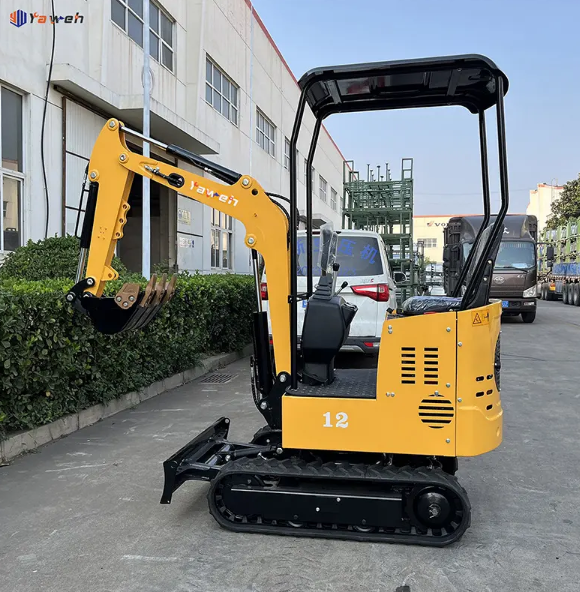
You can find mini excavators in many sizes. Compact models fit into tight spaces. These machines often have a width between 2.3 and 3.5 feet, or 700 to 1050 millimeters. Mid-size machines are a bit wider. Their width ranges from 3.5 to 5 feet, or 1050 to 1500 millimeters. You can use a compact mini excavator for jobs like indoor demolition or garden trenching. Mid-size models work well for small construction sites or orchard maintenance.
Tip: Always check the mini excavator size chart before you choose a machine. This helps you match the mini excavator width to your project needs.
Large mini excavators give you more digging power. Their width ranges from 5 to 7.2 feet, or 1500 to 2200 millimeters. You can use these machines for bigger jobs, such as utility trenching or landscaping large areas. The average width of a mini excavator in this class lets you move more soil and reach deeper spots. You must make sure the width of a mini excavator fits your site. If you need to pass through a narrow gate, a smaller model works better.
Here is a mini excavator width comparison table:
Weight Class | Width Range (Feet) | Width Range (Millimeters) |
|---|---|---|
0.8-2 Tons | 2.3 - 3.5 | 700 - 1050 |
2-4 Tons | 3.5 - 5 | 1050 - 1500 |
4-6 Tons | 5 - 7.2 | 1500 - 2200 |
Yaweh has been manufacturing mini excavators since 2009 and offers a full product range covering different widths, weight classes, and power types. Whether you need an ultra-compact machine for indoor access, a mid-size model for orchard trenching, Yaweh has a model to match your site conditions. The table below shows the chassis widths and best-fit applications for each model in the Yaweh mini excavator lineup:
Model | Chassis Width | Best For |
|---|---|---|
730mm | Indoor access, zero tail swing, narrow municipal trenching, orchard work | |
13HP Mini Excavator | 730mm | Tight workspaces, garden paths, easy transport, multi-attachment operation |
YW12 Mini Excavator | 930mm | Light multi-purpose use, municipal work, agriculture, garden renovation |
YW13 Compact Mini Excavator | 1100mm | Orchard trenching, municipal pipe laying, indoor demolition, precise operation |
YW15 Mini Excavator | 1100mm | Slopes, hilly terrain, terraced fields, up to 40° climbing capability |
YW17 Mini Excavator | 1100mm | Urban construction, narrow access sites, quick coupler for multi-attachment tasks |
YW20 Lithium Mini Excavator | 1100–1400mm (adjustable) | Landscaping, municipal work, agriculture, small construction with zero tail swing |
You can use these models for many jobs. Yaweh mini excavators help you work in tight areas, dig trenches, and handle landscaping tasks. Always compare the mini excavator width to your site conditions. This makes your work safer and faster.
Some mini excavators have an expandable undercarriage. This means you can change how wide the machine is. You can make the tracks narrow to fit through small gates or between buildings. When you get to your work spot, you can make the undercarriage wider. This gives the mini excavator more balance and keeps it steady. It helps you stay safe on bumpy ground or when lifting heavy things.
The Yaweh YW20 Lithium Mini Excavator is a strong example of this design. Its undercarriage adjusts from 1100mm to 1400mm. You narrow the tracks to pass through tight access points, then expand them to gain maximum stability while digging. Combined with zero tail swing and a 72V lithium battery system, the YW20 gives you both access flexibility and worksite safety. The table below shows how this adjustable undercarriage works in practice:
Model | Retracted Width | Expanded Width | Use Case Description |
|---|---|---|---|
Yaweh YW20 Lithium Mini Excavator | 1100mm | 1400mm | Pass through narrow gates at 1100mm, then expand to 1400mm for maximum stability during landscaping, municipal, or small construction tasks |
There are many good things about adjustable mini excavator width. You can move the machine through a small space, then make it wider for better balance. This is great for jobs in cities, inside buildings, or crowded areas. A mini excavator with an adjustable undercarriage can fit through a regular fence gate or doorway and still perform safely once inside the work area.
You also save time because you do not need to move things out of the way or build new paths. The adjustable undercarriage lets you pick the right width for your job. You can check the mini excavator size chart to find models with this feature.
But remember, always make the undercarriage wider before you dig a lot. This gives you the best safety and balance. Adjustable width is best for light or medium jobs where space changes. You can use it for landscaping, digging trenches, or fixing up buildings.
Tip: Always measure doors and work areas before picking a mini excavator. This helps you choose the right mini excavator width for your job.
You should check your job site before picking a mini excavator width. Look at how wide gates and paths are. Notice any obstacles that might block the machine. If you work in cities, measure alleys and sidewalks. For house building, check backyard gates and driveways. In gardens, see if there is enough space between plants and on narrow paths. Farms often have tight spots near crops or irrigation systems. Demolition jobs may need the smallest mini excavators to fit through doors or inside buildings. The ground matters, too. Bumpy or soft ground can change what width is best for balance. Knowing the mini excavator width helps you avoid problems and keeps your project on track.
Tip: Use a mini excavator size chart to compare models and pick the best one for your site.
You need to match the mini excavator width to your project. If you work in small spaces, pick a compact model. For landscaping, make sure the machine fits between trees and flower beds. Some construction jobs need a mid-size excavator to dig deeper or move more dirt. On farms, choose a width that lets you dig near crops without hurting them. Demolition work often needs machines that can move inside buildings. Do not pick a machine that is too big or too small. Think about the size of your job, the space you have, and what you need to move.
Check the size to make sure the excavator fits your work area.
Think about what your project needs so the machine can do the job.
Compare Yaweh models by chassis width and weight class to find the best fit for your application.
Choosing the right mini excavator width helps you turn and work better. It also saves time and money.
Moving and storing mini excavators takes some planning. Pick the right trailer for your machine's width. Flatbed trailers are good for small excavators. Lowboy trailers are better for medium or large machines. RGN trailers can carry heavy loads and make loading easier.
Trailer Type | Suitable for Mini Excavators | Key Features |
|---|---|---|
Flatbed Trailer | Yes | Affordable, easy to load, good tie-down spots, not for tall machines |
Lowboy Trailer | Yes | Low deck, avoids height problems, fits medium to large excavators |
RGN Trailer | Yes | Removable front, holds heavy loads, easy to load big excavators |
Clean ramps and tracks before you load the machine. Put the heaviest end on the trailer first. Tie down the excavator at the right spots. Lower the bucket and pull in the arm for travel. Plan your trip to skip bridges with weight limits or roads that are too narrow. If your load is wider than 102 inches, you might need a permit or an escort car. Check rules for travel times and height in each state.
Note: Good planning stops delays and keeps your mini excavator safe when you move or store it.
Mini excavator widths can be between 2.5 and 7.2 feet. The width is important because it lets you work in small spaces and move the machine easily.
Mini excavators are good for building sites that do not have much room.
Their small size helps you get through tight spots.
Smaller machines are easy to bring to places that are hard to reach.
When picking a mini excavator, think about the model, weight class, and if it has adjustable parts. Yaweh has choices for many kinds of jobs, from the ultra-compact YW09 at 730mm to the adjustable-undercarriage YW20 at 1100–1400mm. Always look at the mini excavator size chart and check the details.
Specification | Description |
|---|---|
Overall Dimensions | Make sure the excavator's width fits your work area. |
Digging Depth | Choose a model that can dig as deep as you need. |
Arm Reach | Check that the arm can reach where you want. |
Think about what your project needs before you pick a mini excavator width. This helps you finish your work safely and do it well.
You measure the width from the outside edge of one track to the other. Check the mini excavator size chart for exact numbers. Always compare models before you buy or rent.
Most 1 ton mini excavators are about 30 to 36 inches wide. You can fit them through standard gates and doorways. Always measure your gate before you start your project.
Adjustable undercarriage width lets you move through narrow spaces. You expand the tracks for stability when digging. This feature helps you work safely in tight areas. The Yaweh YW20 Lithium Mini Excavator is a good example, with an undercarriage that adjusts from 1100mm to 1400mm to suit both access and stability needs.
The Yaweh YW09 Zero Tail Mini Excavator has a chassis width of 730mm, making it ideal for indoor access and narrow spaces. It works well for demolition and renovation tasks.


