
English


Views: 0 Author: Site Editor Publish Time: 2026-11-20 Origin: Site


Are labor shortages slowing down your daily farm operations? Modern agriculture demands faster, smarter equipment. A reliable material handler provides a highly versatile solution. It acts as the ultimate multi-tool for today's demanding agricultural environments. In this post, you will discover how these machines transform daily logistics, adapt to tight spaces, and ultimately boost your bottom line.
Unmatched Versatility: Replaces multiple traditional machines by adapting to diverse agricultural environments.
Strategic Selection: Understanding your spatial footprint helps determine the exact machinery required for optimal workflow.
Attachment Integration: Utilizing specialized tools transforms a standard machine into a precision instrument for specific seasonal tasks.
Safety and Maintenance: Adhering to load charts and establishing routine protocols ensures long-term operational reliability and protects your investment.
Before diving into the mechanics, let us examine the current trajectory of agricultural machinery. Recent market analyses reveal a decisive shift in farm equipment procurement. As global agricultural labor pools shrink and operational costs rise, farm managers are abandoning single-use machines. Instead, the trend heavily favors high-capacity, multi-functional material handling solutions. The industry is witnessing a surge in demand for equipment that can seamlessly transition from stacking bales to loading grain within the same hour. This evolution is driven by the urgent need to maximize fuel efficiency and reduce fleet sizes while maintaining high productivity levels.
Historically, standard tractors equipped with front-end loaders were the primary workhorses. However, these setups face distinct mechanical limitations. Their fixed radial lift paths restrict forward reach and compromise overall stability when handling elevated, heavy loads.
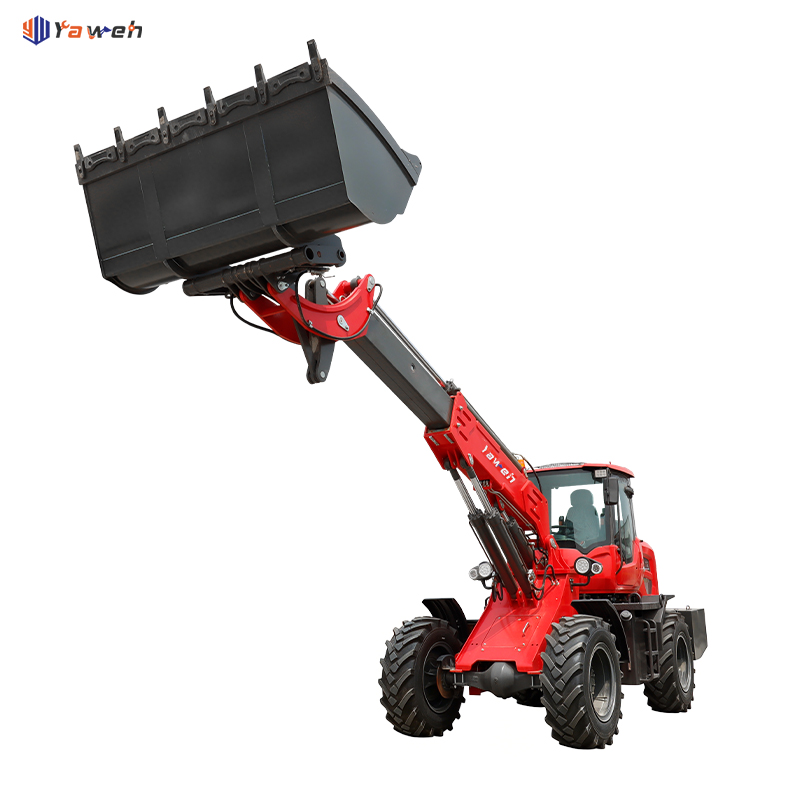
This operational gap is precisely where the extending boom demonstrates immense value. Unlike traditional setups, the boom extends forward and upward simultaneously. Imagine trying to stack large round bales into the top tier of a pole barn. This unique kinematic design allows operators to reach effortlessly over obstacles like fences or feed bunks.
Farm environments frequently feature confined spaces. Older barns, narrow feed alleys, and densely packed storage sheds demand machinery with exceptional maneuverability. Modern units navigate these tight corners with pinpoint accuracy. Operators handle pallets in cramped barn spaces where traditional loaders lack hydraulic flexibility. The efficiency gains become immediately clear across daily tasks.
Selecting the appropriate machinery requires a systematic assessment of your spatial footprint and lifting demands. Purchasing a machine with inadequate capacity creates immediate safety hazards. Conversely, over-investing in excessive capacity reduces your return on investment. The decision process must focus on maximum lifting capacity, maximum lift height, and hydraulic flow rate.
To make an informed decision, align the machine's capabilities with your exact logistical requirements. Investing in a properly sized agricultural telescopic loader ensures optimal fuel efficiency and seamless workflow integration.
Space constraints dictate equipment choice. A compact telescopic loader is specifically engineered for restricted environments. Models like the T2500 series typically handle around 2,500 kilograms while featuring a lower cab height and a narrower chassis. This makes them highly beneficial for small-scale farms, poultry houses, and traditional dairy barns with low door clearances. Despite their smaller physical footprint, these units retain robust hydraulic breakout force. They efficiently lift dense materials like wet manure or heavy silage blocks. If your daily chores involve navigating narrow aisles, the compact variant offers necessary agility without sacrificing essential lifting power.
Large-scale agricultural enterprises require completely different specifications. A high lift telescopic loader prioritizes vertical storage and heavy bulk handling. Machines such as the T3500 series handle up to 3,500 kilograms with ease. They are characterized by longer boom extensions reaching over 7 meters and feature heavier counterweights. Applications such as stacking large square bales in tall storage sheds, loading high-capacity transport trucks, and managing industrial farming tasks require the structural integrity of a high-lift model.
| Feature | Compact Series 2500 Class | High Lift Series 3500 Class |
|---|---|---|
| Primary Use Environment | Low-clearance barns, poultry houses, tight spaces | Large storage sheds, open fields, bulk storage |
| Typical Lift Height | Up to 6 meters | 7 to 10+ meters |
| Maneuverability | Exceptional in tight, confined areas | Moderate; requires wider turning areas |
| Load Capacity | Optimized for daily chores around 2.5 tons | Heavy-duty lifting up to 3.5 tons |
The true value of this equipment becomes apparent in the field. By serving as a multi-purpose power unit, it consolidates the workload of several single-purpose machines.
Hygiene and feeding schedules demand high precision. These loaders excel in cleaning out livestock stalls, efficiently removing compacted manure with specialized bucket attachments. Picture a crisp winter morning: precise hydraulic controls allow an operator to distribute feed evenly along narrow bunks without damaging the surrounding infrastructure. The extended reach is highly effective for distributing fresh bedding across deep-litter pens, ensuring livestock welfare while slashing manual labor hours.
Modern farms process substantial quantities of packaged materials. The loader simplifies the logistics of moving heavy palletized goods, such as fertilizer, bulk seed bags, and chemical containers. During the hectic planting season, safely lifting and positioning one-ton seed bags directly over a planter saves valuable time. You can easily transport heavy equipment parts across expansive properties during field repairs.
Efficient storage directly impacts profitability by protecting harvested crops from weather degradation. High-reach capabilities allow farmers to maximize vertical storage space within sheds. Whether stacking round hay bales, organizing straw, or managing root crop boxes, the boom extension ensures safe, precise placement. Utilizing vertical space effectively reduces the need for constructing additional storage facilities.
Beyond specific agricultural tasks, the machine acts as a vital tool for general farmstead upkeep. Equip it with a snow pusher during winter months to clear access roads rapidly. Following severe weather, it proves instrumental in clearing fallen trees and debris. Maintain your farmstead with one versatile tool that navigates muddy, uneven terrain effortlessly.
Think of the machine as a mobile hydraulic power station. Its true utility is unlocked through specific attachments. Modern quick-hitch systems allow operators to transition from mucking out a barn to loading pallets in mere minutes.
Pallet forks transform the loader into an all-terrain forklift. They remain vital for standard logistics, allowing operators to move bulk supplies, wooden pallets, and IBC totes. The self-leveling feature found on modern booms ensures forks remain parallel to the ground during lifting, preventing dangerous load spillage.
Bulk material handling requires a variety of buckets and grabs. Standard grain buckets feature large capacities for loading loose commodities. Meanwhile, muck grabs and shear grabs handle silage perfectly. These tools simplify manure removal tasks and are engineered to bite into compacted silage. A clean cut prevents secondary fermentation in the clamp.
Hay and straw management requires specialized handling to prevent bale damage. Bale spears provide quick, efficient penetration of large round or square bales. For wrapped silage bales, specialized hydraulic bale clamps gently grip the bale without puncturing the airtight plastic film, preserving feed quality.
Selecting the right tool for the season turns your loader into a multi-season workhorse. A farm might use a bucket for snow removal in winter and pallet forks for seed handling in spring. Always ensure secure connections and check hydraulic lines before operation.
Operating heavy machinery in dynamic agricultural environments carries inherent risks. Enhancing safety protocols protects personnel and improves overall operational efficiency by reducing downtime.
Understanding your load chart is the absolute most critical safety requirement. Stability remains critical for high lifts. As the boom extends forward and upward, the machine's center of gravity shifts dramatically. Operators must strictly adhere to the manufacturer's load charts, which dictate maximum safe lifting capacities at various boom angles. Never exceed the rated tipping load. Always keep the load low during transport. Modern machines incorporate Load Moment Indicators that provide visual and auditory warnings when approaching stability limits.
Operator training stands as a fundamental requirement. Due to the boom's position, visibility can be partially obstructed on the right side of the cabin. Proper training emphasizes situational awareness and smooth handling of hydraulic joysticks. Ergonomic cabin designs with proper climate control significantly reduce operator fatigue during long, demanding harvest shifts.
Agricultural environments are notoriously harsh. Dust, mud, acidic manure, and continuous heavy lifting accelerate wear. Implementing a proactive maintenance schedule is essential for ensuring long-term performance and minimizing unexpected breakdowns.
Routine checks prevent expensive field downtime. Inspect engine oil levels daily and monitor hydraulic fluid for any leaks. The hydraulic system acts as the lifeblood of the equipment. Any drop in fluid levels must be addressed immediately to prevent pump cavitation. Keep the boom clean of debris and lubricate all pivot points weekly. This maintains smooth operation and prevents premature metal-on-metal wear.
Cleaning procedures hold equal importance, especially in livestock farming. Rust prevention is vital since manure and fertilizer act as highly corrosive materials. Wash the chassis after muddy work, paying special attention to the cooling package to prevent engine overheating caused by blocked airflow.
Evaluating machinery options requires shifting focus from the initial purchase price to the Total Cost of Ownership over the machine's lifespan. Investing in reliable equipment yields measurable returns through increased uptime and lower maintenance costs.
Build quality determines long-term success. Thick steel boom construction, robust frames, and internally routed hydraulic hoses indicate true durability. Responsive hydraulics improve daily work speed. For instance, the Telescopic Loader T3000 series balances robust lifting capabilities with refined hydraulic control necessary for delicate farm tasks. A high-quality machine offers smooth, proportional control, allowing operators to perform multiple boom functions simultaneously without power lag. Reliability means fewer surprises during the critical harvest window.
A telehandler acts as far more than just a standard material handler; it is a comprehensive labor-saving solution. By matching machine size to specific daily work needs, you streamline logistics year-round. This equipment saves substantial time and labor across all seasons. Maximize your long-term operational efficiency and drive greater agricultural productivity by choosing the right equipment today. Visit https://www.yawehbackhoe.com to explore reliable models tailored to your specific demands and find the perfect machinery fit for your operational needs.
A standard tractor loader operates on a fixed radial lift path, which limits its forward reach and maximum height. In contrast, a telehandler features an extending boom that pushes forward and upward simultaneously. This specialized geometry provides superior reach over obstacles, greater lifting heights for vertical storage, and enhanced stability when handling heavy loads.
Yes, absolutely. While they have a smaller physical footprint designed to navigate low-clearance barns and narrow aisles, their power is derived from robust hydraulic systems. This allows them to efficiently lift and transport dense, heavy materials like wet manure or large silage blocks, proving that capability is about hydraulic strength rather than just physical size.
While specifications vary by manufacturer and model, these heavy-duty machines typically offer lift heights ranging from 7 to over 10 meters. This extended reach is specifically engineered for large-scale agricultural enterprises that need to stack large square bales in tall storage sheds or load bulk grain into high-capacity transport trucks.
Lifting capacities depend heavily on the specific model and the boom's extension angle. Compact models typically handle between 2.5 to 3 tons safely. High-lift, heavy-duty agricultural models can lift anywhere from 3.5 to over 5 tons. Always consult the specific load chart in the cabin to determine the safe lifting capacity at your current boom extension and angle.
Not at all. Modern equipment is designed with hydraulic quick-hitch systems. This technology allows operators to safely and quickly swap out heavy attachments directly from inside the ergonomic cabin. Moving from a bucket to pallet forks takes only minutes, significantly reducing manual labor and maximizing operational uptime.
Licensing requirements vary depending on your local and regional regulations. In many jurisdictions, operating entirely on private agricultural land does not require a commercial license. However, if you plan to drive the machine on public roads between fields, specific agricultural vehicle licenses or endorsements are usually mandatory. Regardless of legal requirements, formal operator safety training is always highly recommended.
The health of the hydraulic system and boom lubrication are paramount. Daily checks of hydraulic fluid levels, immediate repair of any hose leaks, and weekly greasing of boom wear pads and pivot points prevent costly metal-on-metal wear. Regular pressure washing to remove corrosive manure and fertilizer is essential to protect the machine's structural integrity.


