
English


Views: 0 Author: Site Editor Publish Time: 2026-08-01 Origin: Site


Standard warehouse material handling equipment frequently fails in rugged construction environments. Navigating uneven terrain demands robust engineering. Unpredictable weather variables and heavy-duty loads require purpose-built machinery. A sturdy forklift diesel model offers the sheer torque necessary for challenging outdoor jobs. It provides unmatched durability. However, choosing the wrong specification leads to major operational issues. It causes costly site downtime. It creates serious safety hazards. It results in wasted capital. You must carefully match machine capabilities to actual site conditions.
This guide provides fleet managers and site operators a concrete evaluation framework. You will learn how to select the right forklift systematically. We cover lift capacity, terrain capabilities, and comprehensive financial planning. By mastering these core dimensions, you optimize fleet efficiency. You also safeguard your workforce against preventable accidents.
Site terrain dictates equipment class: Do not substitute a standard pneumatic tire forklift for a true off road forklift on unimproved surfaces.
Lift capacity must account for load centers and attachment weight, not just raw material weight.
Rough terrain telehandlers offer maximum vertical reach but require larger operating footprints and specialized operator training.
Tier 4 Final engine compliance is mandatory for modern forklift diesel models, requiring specific maintenance protocols in high-dust environments.
Utilization rates (typically >65%) should drive the buy-versus-rent decision.
You must evaluate the primary operating surface before looking at machinery. Look closely at your site terrain. You will encounter compacted dirt, gravel, deep mud, or sloped grades. A smooth, compacted surface allows standard 2WD equipment to function properly. Muddy terrain demands robust 4WD capabilities. Chassis clearance also matters heavily. Low clearance leads to getting stuck quickly. High clearance keeps operations moving through deep ruts.
Common Mistake: Site managers often assume dry summer conditions will last year-round. They purchase 2WD machinery. When autumn rains arrive, the equipment becomes hopelessly stuck in deep mud. Always evaluate ground conditions based on the worst anticipated weather.
Space constraints dictate size limits immediately. You must measure site access points accurately. Calculate the tightest turning radiuses across the site layout. Identify overhead clearances carefully. Look for low power lines, structural beams, and dense scaffolding. These physical measurements restrict your maximum mast height. They also limit the overall equipment footprint. A massive machine cannot maneuver safely through narrow residential development plots.
Analyze your material variables thoroughly. Document the exact nature of the loads. You might handle palletized concrete blocks today. Tomorrow, you could lift loose lumber bundles or heavy steel piping. Documenting these specific materials determines necessary fork lengths. It dictates load stabilization needs. Integrating comprehensive construction handling solutions into your planning ensures safer daily operations. Specialized materials often require specialized rigging.
These models perform best on paved or hard-packed dirt surfaces. You use them mostly in organized staging areas. They excel in designated material drop-off zones where the ground remains flat. However, they possess severe limitations. They become entirely ineffective in deep mud. Highly rutted environments trap their smaller tires quickly. Their limited ground clearance prevents true off-road usage across rugged sites.
These machines suit unimproved sites perfectly. They excel at heavy, repetitive lifting cycles. They feature aggressive tire treads. They boast a highly reinforced, durable chassis. You will often see a true off road forklift moving massive brick pallets across muddy lumber yards safely. Yet, they have distinct limits. Vertical reach remains strictly linear. You cannot place loads over deep obstacles or wide trenches.
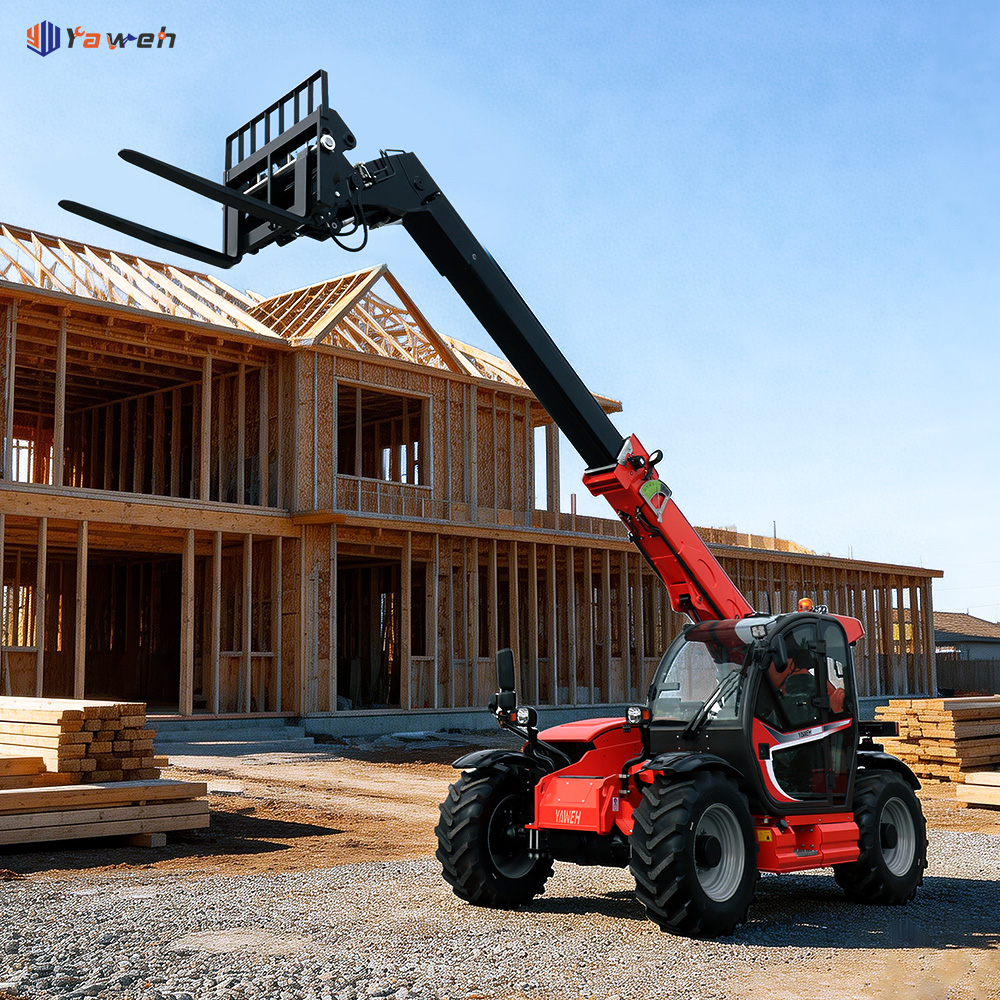
These units offer maximum versatility on complex sites. A modern rough terrain telehandler lifts heavy loads over wide trenches easily. Operators can place materials directly onto high scaffolding structures. They use extendable telescopic booms instead of straight masts. However, they carry a much higher upfront purchase cost. They require highly complex maintenance routines. Furthermore, boom operation requires specialized operator training. Drivers must maintain strict adherence to complex load charts.
| Equipment Category | Best Suited For | Primary Limitations | Ideal Terrain Types |
|---|---|---|---|
| Standard Pneumatic | Staging areas, drop-off zones, quick pallet moving | Poor ground clearance, gets stuck easily | Paved asphalt, compacted dry dirt |
| Rough Terrain (Straight Mast) | Heavy repetitive lifting, harsh environments | Linear reach only, cannot reach over obstacles | Mud, gravel, deeply rutted soil |
| Telehandlers (Telescopic) | Maximum vertical reach, overcoming obstacles | High cost, complex operation, large footprint | Uneven ground, varied elevations |
Load center calculations remain critical for job site safety. Frame capacity requirements demand careful mathematical planning. You start by identifying the maximum anticipated load weight. Next, add a strict 15-20% safety margin. This margin prevents dangerous tipping incidents. It protects operators moving awkwardly shaped materials.
You must account for load center derating constantly. Manufacturers rate machines at specific load centers. A machine might lift 10,000 lbs perfectly at a 24-inch load center. However, it loses capacity rapidly if handling 48-inch deep materials. The center of gravity shifts forward dramatically. This physical shift reduces the safe lifting limit. Operators must understand these physical limits to prevent fatal rollovers.
Determine the heaviest raw material weight you plan to lift.
Add a 15-20% weight safety buffer.
Measure the physical depth of the load to find the center point.
Consult the manufacturer derating chart based on the new center point.
Evaluate duplex versus triplex masts carefully. Base this decision on necessary lift height. Keep collapsed height restrictions in mind constantly. Lower doorways require a lower collapsed mast height. Triplex masts collapse shorter but extend higher. Assess the absolute need for outriggers. Think about frame-leveling capabilities on uneven ground. Frame leveling allows the chassis to tilt left or right. This keeps the mast perfectly plumb even when parked on a steep slope.
Tire selection dictates off-road performance directly. Wrong tires halt production immediately. You generally choose between two primary pneumatic types.
Air-filled Pneumatic Tires: These tires offer superior shock absorption. They reduce operator fatigue during long shifts. They navigate uneven ground smoothly. However, they carry a high risk of flats. Sharp debris stops them easily.
Foam-filled or Solid Pneumatic Tires: These represent the heaviest duty option available. They eliminate puncture risks entirely. Job site debris like stray nails and exposed rebar cannot pierce them. However, they translate more vibration directly to the chassis. Operators feel more bumps. Machine components experience higher shock loads.
Modern construction sites require strict emissions compliance. You must understand the maintenance realities of these modern engines. Mechanics manage Diesel Exhaust Fluid (DEF) systems daily. They must oversee Diesel Particulate Filter (DPF) regeneration cycles. The DPF traps harmful soot particles effectively. The engine periodically burns this soot away during regeneration. Operators cannot interrupt this active cleaning cycle. Interrupting regeneration damages the exhaust system severely.
Construction environments generate excessive airborne dust. You must plan for increased filter replacement frequencies. High-dust environments clog air filters rapidly. Frequent maintenance keeps the engine breathing properly. Ignoring these protocols leads to catastrophic engine failure. It also voids expensive manufacturer warranties.
Best Practice: Keep sealed, fresh DEF fluid stored in climate-controlled areas. Contaminated or degraded DEF fluid triggers immediate engine derating protocols, shutting down machine operation.
Standard forks cannot handle every material safely. You often need specialized attachments. However, you must factor in the weight of these attachments carefully. Side shifters add dead weight to the carriage. Fork positioners reduce raw lifting power. Bucket attachments push the load center far forward. You must subtract this attachment weight from the total machine lift capacity.
We highly recommend evaluating quick-coupler systems. These systems excel if the machine performs multiple roles. Operators can switch from standard forks to secure work platforms rapidly. They can swap buckets in minutes. Quick-couplers increase daily machine utilization significantly. They keep operators moving without long delays.
Look well beyond the initial sticker price. Smart buyers calculate estimated fuel consumption over the machine's lifespan. You must map out preventative maintenance intervals accurately. You should also forecast the anticipated residual value. Reliable brands hold resale value much better. A cheaper upfront purchase often costs more over five years. Predictable fuel usage keeps budgets stable. Dedicated preventative maintenance prevents catastrophic, budget-breaking engine failures.
Utilization rates guide this choice. Short-term or specialized projects generally favor renting. If a job lasts under six months, renting preserves vital operating capital. It also removes maintenance liabilities from your balance sheet.
Predictable, long-term utilization justifies purchasing. If operational time exceeds 65%, buying or long-term leasing makes profound financial sense. Ownership builds equity. It ensures the machine remains available exactly when you need it.
Machinery breaks down eventually. When it does, dealer support becomes your most valuable asset. Restrict your final shortlist to reputable OEMs and dedicated local dealers. They must guarantee fast on-site service response times. You need technicians arriving within hours, not days.
Local parts stocking remains equally vital. Waiting two weeks for a simple hydraulic hose is unacceptable. A broken machine halts site progress entirely. Fast repairs save thousands in lost project wages. Ask dealers about their parts availability rates. Review their mobile service fleet capabilities before signing any purchase order.
Selecting the optimal equipment requires balancing raw lift capacity with the physical realities of your job site. You must account for terrain, load centers, and emissions compliance. Over-specifying a machine drains your equipment budget unnecessarily. Conversely, under-specifying compromises site safety and halts productivity entirely.
Take action today by requesting a comprehensive site assessment from a certified local dealer. Download a specialized payload calculation worksheet to finalize your exact specifications before making a financial commitment. Proper planning today prevents costly delays tomorrow.
A: The primary difference lies in mast mechanics. A rough terrain forklift uses a straight vertical mast. It lifts loads straight up and down. A telehandler features an extendable telescopic boom. This boom allows operators to reach forward and lift loads over obstacles or deep trenches. Telehandlers also require a much larger operating footprint.
A: These machines typically last between 10,000 and 15,000 operating hours. Lifespan depends heavily on preventative maintenance routines. Operating environments play a massive role. Machines operating in highly corrosive or excessively dusty conditions wear out faster unless maintained aggressively.
A: No. Diesel engines produce dangerous carbon monoxide emissions. Using them indoors violates strict OSHA compliance regulations. It creates severe, life-threatening safety hazards for enclosed workers. We strongly advise switching to electric machinery or ensuring highly ventilated protocols if partial indoor use is absolutely unavoidable.
A: Yes, it reduces capacity significantly. You must account for the physical weight of the attachment itself. Furthermore, bulky attachments often push the load center further forward away from the mast. This combined effect extends the load center, requiring you to follow derating charts strictly.


