
English


Views: 0 Author: Site Editor Publish Time: 2026-08-08 Origin: Site


Transitioning from general-purpose farm tractors to dedicated lifting machinery marks a critical growth threshold. It proves you are ready to scale operations efficiently. Repurposing front-end loaders for repetitive lifting often restricts your true daily potential. Agriculture and forestry environments present uniquely harsh realities every single day. You constantly battle uneven terrain, seasonal mud, and extremely tight barn clearances. Operators must carefully manage awkward, shifting loads like raw timber, heavy seed pallets, or bulk feed. This guide provides a pragmatic, evidence-based framework for your heavy equipment strategy. It helps you evaluate if a compact lifting unit represents the right capital investment. You will learn how to match machinery directly to your specific site conditions and daily workflow. We will explore operational efficiency, environmental adaptations, and essential safety considerations.
Targeted Efficiency: Dedicated small forklifts eliminate the inefficiencies of repurposing tractors for heavy, repetitive lifting tasks.
Terrain Adaptability: Purpose-built off-road designs prevent downtime caused by seasonal mud, rutted fields, and debris-heavy forest floors.
Equipment Distinction: Selecting between a standard rough-terrain forklift and an agricultural telehandler depends entirely on required lift height and forward reach requirements.
Risk & ROI: While upfront costs are significant, verifiable ROI is achieved through reduced labor hours, lower product damage, and minimized equipment wear-and-tear.
Relying on legacy methods often hides major operational inefficiencies. Many farms currently use non-specialized equipment for heavy lifting. Tractor loaders might seem versatile initially. However, they struggle immensely when handling palletized goods. They also fail to safely transport dense hay bales or heavy timber. These multi-purpose machines consistently deliver slower cycle times. They heavily compromise load stability during transit. You constantly risk dropping expensive materials. Product damage eats directly into your profit margins.
A dedicated machine completely transforms your daily labor and throughput metrics. Think carefully about unloading feed deliveries or moving bulk seed. Specialized machinery sharply reduces your required man-hours. Workers can finish unloading supply trucks in mere minutes. Previously, this exact task took several hours. Stacking rough lumber becomes a streamlined, single-operator task. You free up other workers for more valuable field tasks.
What does a successful implementation actually look like? We define success through clear, measurable operational criteria. You should target a 30% reduction in average unloading times. You also want absolutely zero weather-related work stoppages. A proper setup entirely eliminates dangerous manual staging. Workers no longer move heavy items by hand. This reduces workplace injuries significantly. Implementing dedicated material handling equipment solves these specific workflow bottlenecks.
A common mistake involves ignoring the hidden costs of equipment wear. Using a front-end loader stresses the tractor's front axle heavily. Tractors are designed primarily for pulling. They are not engineered for lifting heavy vertical loads continuously. Over time, you cause severe mechanical stress. Dedicated lifting machinery preserves your primary field tractors.
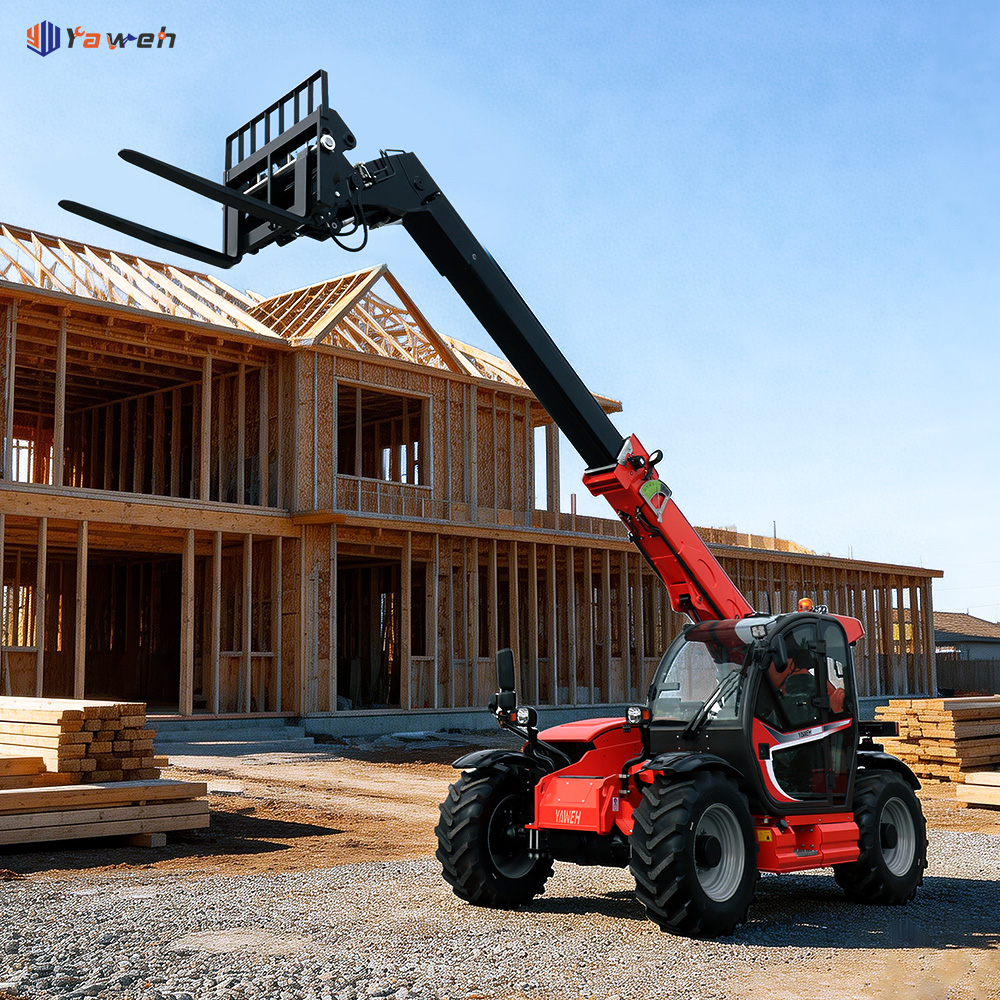
Warehouse lifts fail completely in outdoor agricultural settings. Engineering differences matter immensely in rough environments. You absolutely need strong traction and high ground clearance. An off road forklift uses specialized pneumatic deep-tread tires. These massive tires grip loose dirt and mud effortlessly. Differential locks keep both drive wheels moving simultaneously. This prevents the machine from getting stuck in deep ruts. Articulated steering allows exceptionally tight turns on unpaved paths.
Weight distribution plays a massive role in overall vehicle stability. Rough-terrain models feature highly specialized counterweight designs. They distribute weight evenly across the entire chassis. This specific design prevents the machine from sinking. Soft agricultural soils easily trap poorly balanced equipment. Forestry plots often feature marshy, highly unpredictable ground. Proper weight balancing keeps the machine upright and moving forward.
Weather resilience separates adequate machines from truly great ones. Agriculture and forestry demand reliable all-weather performance. Look closely for models featuring fully enclosed cabs. They protect your operators from extreme summer heat. They also shield them from freezing winter winds. Cold-weather starts ensure your machine runs during winter freezes. Factory-sealed components block dust, chaff, and harmful moisture. This critical protection prevents frequent mechanical failures during harvest season.
Best practices dictate diligent tire maintenance. Maintain correct tire pressure daily. Over-inflated tires bounce dangerously on unlevel ground. Under-inflated tires risk slipping off the rim in deep mud. Consistent maintenance guarantees maximum traction.
Choosing the correct machine requires analyzing your specific daily tasks. Sometimes you need a highly nimble unit. Other times you need extreme forward reach.
When should you realistically choose a small forklift? It works best for high-cycle, vertical-lift tasks. You might navigate narrow barn aisles multiple times daily. Loading flatbed trucks quickly requires a compact machine footprint. Sorting timber in a tight staging yard demands excellent maneuverability. These machines offer an exceptionally tight turning radius. They also generally require significantly lower maintenance over time.
When should you choose an agricultural telehandler? This machine becomes absolutely necessary when operations demand forward reach. You might need to stack dense bales three-deep. Reaching completely over fences or feed bunks is impossible otherwise. Telehandlers extend horizontally, providing incredible operational versatility. They utilize complex boom mechanics for precise load placement.
What about standard tractor attachments as a temporary stopgap? We must objectively evaluate basic 3-point hitch attachments. They serve primarily as a low-cost, low-efficiency alternative. Use them only for intermittent, lightweight lifting tasks. They completely lack the stability for heavy, continuous lifting. Do not consider them true enterprise agricultural solutions.
Review the comparison chart below to understand the distinct operational differences.
| Feature Focus | Compact Vertical Lift | Telehandler Machine | Tractor Attachment |
|---|---|---|---|
| Primary Use Case | High-cycle vertical lifting | Extended forward reaching | Light, infrequent tasks |
| Site Maneuverability | Excellent in tight spaces | Moderate, requires open room | Poor, creates a bulky setup |
| Maintenance Burden | Generally Low | Moderate to High | Very Low |
| Initial Capital Cost | Moderate | High | Low |
You must evaluate several core criteria before purchasing any machinery. Matching the machine directly to your operation prevents costly mistakes.
First, examine the crucial capacity-to-size ratio.
Identify your absolute heaviest standard load.
Weigh items like wet silage bales or dense hardwood logs.
Match this exact weight to a specific lift capacity class.
Most modern farms operate well in the 4,000 to 8,000 lbs range. Buying an oversized machine ruins your site maneuverability. An overly large unit cannot navigate tight barn doors. You must also measure your lowest barn rafters. Matching the lowered mast height to your rafter clearance prevents structural damage.
Next, evaluate the available attachment ecosystem. You rarely just lift standard wooden pallets. Consider these common, highly specialized attachments:
Bale spears for moving wrapped hay quickly.
Log grabs for securing uneven, heavy timber.
Bucket attachments for loose feed, dirt, or gravel.
Side-shifters for precise, millimeter-accurate load placement.
You must ensure the machine supports rapid attachment swapping. Check the auxiliary hydraulic flow ratings. Insufficient hydraulic flow makes specialized attachments operate sluggishly.
Power source and environmental compliance dictate your daily operations. Diesel engines provide exceptional high torque for heavy loads. However, they require strict Tier 4 Final emission compliance. This adds some maintenance complexity. Emerging lithium-ion options present a compelling modern alternative. They significantly reduce your routine daily maintenance tasks. Yet, they depend heavily on robust charging infrastructure. Extreme cold can also limit overall battery performance.
Finally, assess the reality of overall serviceability. Remote field maintenance represents a harsh operational reality. Can your team perform standard daily checks easily? Minor servicing should happen directly on-site. You want a machine avoiding specialized diagnostic software requirements. Complex software locks you out of performing basic repairs.
Introducing heavy machinery naturally introduces new operational risks. You must manage these hazardous variables proactively.
Safety and rollover risks require highly transparent discussion. Dynamic loads shift unpredictably on extremely uneven terrain. Moving wet logs or large bales changes the center of gravity instantly. You must emphasize strict load-center management daily. Keeping the load low during transport actively prevents tipping. Roll-Over Protective Structures (ROPS) remain an absolute necessity. They routinely save lives during unexpected, sudden tip-overs.
A common mistake involves operators speeding across uneven ground. Elevated loads magnify momentum. Taking sharp turns quickly causes immediate destabilization. Instruct operators to drive at walking speeds over rough patches.
Training bottlenecks often surprise new equipment owners. Dedicated lifting machinery behaves entirely differently than general farm tractors. Operators need highly specific spatial awareness. OSHA or regional equivalent certifications are strictly required by law. You must allocate paid time for proper operator training. Ignoring certification exposes your entire operation to massive legal liability.
Infrastructure requirements also demand close attention before equipment delivery. Your facility might require several subtle upgrades. Factor in the urgent need for reinforced storage floors. Heavy machines easily crack thin concrete barn slabs. You also need dedicated, safe fuel or charging stations. Finally, measure your existing barns and equipment sheds. Ensure adequate clearance for the tall mast and overhead guard.
Investing in specialized lifting equipment secures reliable operational uptime. It effectively protects your profit margins from constant labor shortages. You also insulate your daily workflow against unpredictable weather variables. Dedicated machines simply outwork repurposed tractors.
Apply a simple, practical shortlisting logic before buying. Audit your three most frequent, time-consuming lifting tasks. Determine exactly what specific materials you move daily. Measure your current aisle widths and gate clearances carefully. Do this work before contacting any local dealer.
Take actionable next steps today to improve your farm. Request an on-site dealer demonstration to personally test maneuverability. Consider arranging a short-term rental first. Try the machine during your busy peak harvest or logging season. This validates the business case thoroughly before committing major capital.
A: Most agricultural operations require a minimum lift capacity of 5,000 pounds. This class handles standard weights efficiently. It easily manages heavy seed pallets and large round bales. Wet silage bales weigh significantly more than dry hay. The 5,000-pound class provides a necessary safety margin for these heavier, unpredictable loads.
A: No, it cannot replace a tractor completely. It serves strictly as a specialized complement. Tractors remain essential for draft tasks and pulling heavy implements. They also provide vital PTO functionality for running field equipment. A lifting machine specifically handles palletized goods and rapid material staging.
A: Your decision depends entirely on project duration and frequency. Use a simple breakeven framework. Renting makes sense for seasonal or project-based logging. It limits upfront capital exposure. Buying becomes necessary for year-round mill operations or permanent staging yards. Consistent daily usage quickly justifies the initial purchase price.
A: Mud and sloped ground drastically alter machine stability. You must de-rate the lifting capacity for safety. A machine rated for 5,000 pounds on flat concrete cannot lift that maximum weight safely on muddy inclines. Unlevel ground shifts the load's center of gravity. Always lift less weight outdoors.


