
English


Views: 0 Author: Site Editor Publish Time: 2026-08-11 Origin: Site


Water conservancy projects present a monumental logistical challenge for contractors. Site crews must move exceptionally heavy materials across unstable, unpaved, and high-moisture environments. Standard warehouse machinery immediately fails under these punishing conditions. Saturated soil and uneven riverbanks demand a highly specialized approach to localized material transport. The all terrain forklift bridges the critical gap between heavy earthmoving machinery and final placement. It keeps site operations moving safely when ground conditions deteriorate. This article provides project managers and procurement teams with an evidence-based evaluation framework. You will learn how to properly assess and select the right off-road lifting equipment for challenging water infrastructure projects. We will explore key equipment specifications, primary application scenarios, and necessary risk mitigation strategies. Ultimately, these insights will help you maximize site efficiency and protect your personnel.
Operational Necessity: Standard material handling equipment poses severe safety and delay risks on saturated ground; purpose-built off-road capability is a baseline requirement.
Application Scope: High-clearance equipment accelerates dam construction, pipeline deployment, and flood defense staging.
Evaluation Criteria: Procurement decisions must weigh 4WD capabilities, ground clearance, and attachment versatility against specific site topography.
Risk Mitigation: Proper load-charting on unstable gradients and proactive maintenance are required to realize equipment ROI.
Water conservancy sites feature some of the most unforgiving topography in the heavy construction industry. These environments actively fight against material mobility. Operators face deep mud, uneven riverbanks, and steep embankment gradients daily. You simply cannot rely on a traditional indoor forklift to navigate these hazardous areas. Their low ground clearance causes the chassis to bottom out instantly on rutted paths. Furthermore, their smooth tires quickly spin out on wet clay. This leads to immediate immobilization.
When standard machinery gets stuck, the true cost of downtime skyrockets. Failing to deliver materials halts the broader workflow of vital infrastructure solutions. Crews cannot place heavy riprap, oversized drainage pipes, or massive concrete forms. Idle labor costs accumulate rapidly. Specialized crane operators wait idly for materials to arrive. This localized transport failure cascades through the entire project schedule. It turns a minor equipment mismatch into a major financial delay.
Beyond productivity, safety and compliance remain paramount concerns. Using unsuited machinery on unstable ground creates extreme physical hazards for your workforce. Tip-overs become a high-probability risk when navigating steep river gradients. Standard machines lack the dynamic stability required for slopes. Regulatory bodies strictly classify off-road material transport as a high-risk activity. Therefore, deploying rugged machinery is not merely a productivity hack. It represents a strict compliance requirement and a fundamental safety necessity.
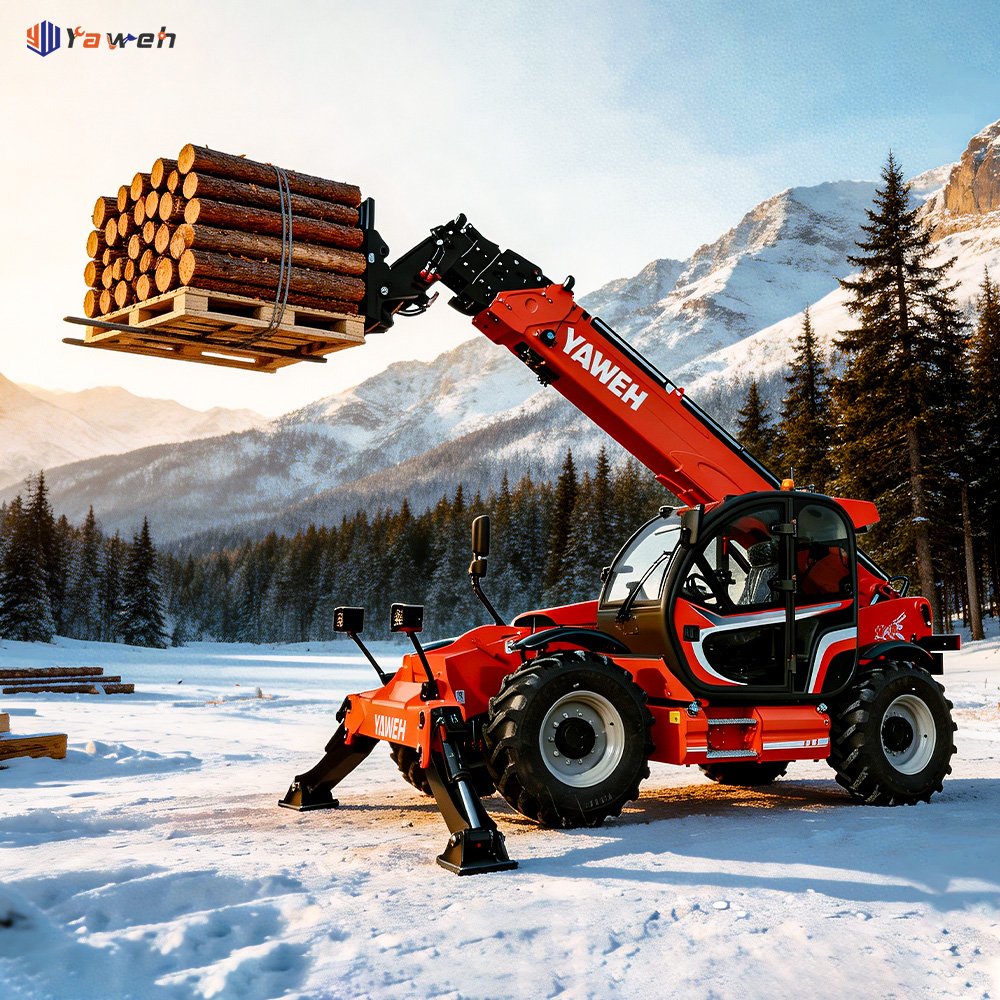
Rugged lifting equipment accelerates multiple phases of water conservancy projects. These machines adapt to various demanding tasks across the job site. Below are the core applications where specialized off-road capability proves essential.
Dam and Reservoir Construction: Building dams requires moving enormous structural components. Crews must transport heavy concrete forms and massive rebar bundles. They move these materials across shifting, uncompacted earth. High-clearance machinery keeps these heavy loads stable during transit. It prevents materials from dragging through the mud and suffering damage.
Flood Control and Emergency Defenses: Time dictates success during flood emergency events. Rapid deployment of defensive materials prevents catastrophic structural failure. An off road forklift accelerates the staging of sandbags and concrete barriers. It maneuvers through heavily saturated staging areas swiftly. This ensures fast staging during time-sensitive embankment reinforcements.
Pipeline and Drainage Staging: Drainage trenches often sit in the lowest, muddiest site sectors. Operators must transport oversized PVC or concrete piping directly to the trench line. Specialized off-road equipment carries this piping across muddy terrain effortlessly. It also transports heavy, skid-mounted pumping units to remote extraction points.
Site Prep and Maintenance: Remote staging areas rarely feature paved surfaces. Managing palletized materials in these zones requires robust machinery. Equipment with aggressive traction easily manages scaffolding, generators, and cement bags. It navigates these unimproved staging zones without tearing up the fragile topsoil.
Project managers must look beyond basic lifting capacities. You must evaluate how specific mechanical features translate to real-world performance. Matching machine specifications to site topography ensures continuous operation.
Traction dictates your ability to operate continuously during adverse weather conditions. Four-wheel drive (4WD) and locking differentials represent mandatory features for water projects. They prevent dangerous wheel spin in deep mud or loose river gravel. Furthermore, hydrostatic transmissions offer superior control on steep gradients. They allow operators to inch forward smoothly without losing engine torque. This precise control prevents sudden jerks. Sudden movements easily destabilize heavy loads on uneven ground.
Adequate ground clearance prevents the machine chassis from bottoming out in deep ruts. However, clearance means little without the correct tire selection. Tires directly determine ground bearing pressure on saturated soil. Pneumatic tires provide excellent flotation and shock absorption on soft mud. Foam-filled tires prevent catastrophic punctures on sharp, rocky riverbanks. Solid rough-terrain tires resist structural damage completely. However, solid tires transfer significantly more shock to the chassis and the operator.
Selecting the right power source impacts both torque delivery and site logistics. The table below outlines the operational realities of internal combustion versus electric power on remote sites.
| Power Source | Performance in Water Conservancy | Primary Limitations |
|---|---|---|
| Internal Combustion (Diesel) | Dominates outdoor, high-torque water projects. Delivers consistent, sustained power for heavy lifting on slopes. Handles extreme exposure to rain and mud effectively. Refueling is rapid and straightforward. | Emits exhaust fumes. Generates significant noise pollution. Requires strict fluid maintenance schedules to prevent environmental contamination near waterways. |
| Battery-Electric | Offers zero emissions near sensitive water sources. Provides instant torque delivery. Reduces overall noise pollution significantly in residential areas. Requires less daily engine maintenance. | Faces severe logistical limitations in remote off-road zones. High-capacity charging infrastructure is rarely available on unimproved sites. Cold weather reduces battery life. |
The lifting mast endures immense physical stress in off-road environments. Heavy-duty masts utilize thicker steel profiles to resist twisting forces. Integrated load-dampening systems absorb harsh kinetic shocks during transit. These hydraulic accumulators act as shock absorbers for the load itself. They prevent heavy materials from bouncing and shifting on uneven terrain. This mechanical stability protects both the operator and the expensive infrastructure materials.
Choosing the correct machine architecture determines your operational flexibility. Project planners must carefully evaluate their specific lifting geometries. The choice typically narrows down to straight-mast models versus telescopic handlers.
A straight-mast model excels at high-capacity, heavy-duty lifting. It thrives in relatively open, unpaved off-road staging areas. These machines offer a significantly lower initial acquisition and rental cost. They also feature a smaller turning radius for tight material yards. Furthermore, they require simpler operator training compared to complex telescopic units. If your primary goal involves moving heavy pallets across mud quickly, this machine represents the ideal choice. It offers unmatched vertical lifting efficiency.
Certain infrastructure applications demand extended forward reach. You might need to place materials over a deep trench. Sometimes you must stage supplies onto a high, unstable embankment. In these exact scenarios, a rough terrain telehandler becomes essential. It extends heavy loads far beyond the front tires.
However, this upgrade involves significant operational trade-offs. Telescopic models come with higher procurement costs. They also demand much stricter load-chart adherence. As the telescopic boom extends outward, the machine's center of gravity shifts dramatically. Operators must meticulously manage this shifting weight. Failure to calculate load geometry properly leads to immediate tipping hazards.
Procuring the right machine solves only half the logistical puzzle. Site managers must actively manage implementation risks to ensure safe, continuous operation.
Rough terrain capability does not mean limitless terrain capability. Operating heavy machinery on unstable gradients introduces severe physical risks. You must strictly de-rate your machine's lifting capacity when working on slopes or soft mud. A machine rated for five tons on flat concrete cannot safely lift five tons on a muddy incline. The dynamic stability triangle shrinks rapidly on uneven ground. Operators must consult gradient-specific load charts before lifting any heavy water pipes.
Off-road material transport demands highly distinct operational skills. Operators need specific safety certifications before driving these machines. This training extends far beyond basic warehouse material handling equipment protocols. They must master slope negotiation, dynamic stability principles, and outdoor load management. Never allow an indoor-certified driver to operate heavy machinery on a muddy riverbank. Specialized Class VII rough terrain training remains a strict regulatory requirement.
Water conservancy sites destroy poorly maintained equipment. Mud, sand, and constant water exposure cause dramatically accelerated wear-and-tear. Proactive maintenance protocols remain non-negotiable for site managers. You must specify machines equipped with sealed wet-disc brakes. These sealed components prevent abrasive sand and water ingress. Additionally, ensure all hydraulic grease points remain easily accessible. Daily greasing purges harmful grit from critical pivot points.
Follow a structured shortlisting logic before finalizing any equipment procurement. Use this evidence-based checklist to evaluate potential vendors:
Request Site-Specific Demos: Demand real-world equipment demonstrations on your actual muddy terrain. Do not rely solely on paved-lot performance.
Verify Parts Availability: Confirm local dealer parts availability to minimize emergency downtime during critical project phases.
Evaluate Attachments: Check specific attachment compatibility for handling specialized water piping and concrete forms safely.
Compare ROI Models: Compare rental versus purchase ROI based strictly on your exact project duration and seasonal weather risks.
Choosing the correct all-terrain machinery directly correlates to project pacing and overall site safety. Water conservancy environments ruthlessly expose the limitations of standard industrial equipment. Standard machinery simply cannot survive deep mud and steep riverbanks. By deploying purpose-built lifting equipment, project managers eliminate costly transport bottlenecks. You keep critical infrastructure materials moving regardless of ground saturation levels.
Take decisive action based on your specific site realities. First, audit your site's maximum gradients and dominant soil types. Second, map out your heaviest expected load requirements for pipes and concrete. Finally, buyers must align these topographical challenges with exact drivetrain, tire, and mast specifications. Verify these details thoroughly before finalizing any procurement. Proper equipment selection ultimately protects your personnel and ensures your project finishes on schedule.
A: Most off-road lifting machines can safely negotiate unloaded gradients between 15% and 25%. However, this baseline drops significantly when carrying heavy materials. Load size, center of gravity, and soil stability dictate the actual safe slope limit. Always consult the manufacturer's specific load chart for gradient de-rating to ensure safe operation.
A: Yes, but only within strict wading depth limits. Most models handle shallow puddles and mud up to the wheel hubs safely. Submerging axles or brake housings risks catastrophic mechanical damage. Always specify models with fully sealed wet-disc brakes if standing water remains a constant site hazard.
A: Not always. While they might share standard ISO carriage classifications, you cannot blindly swap attachments. Off-road environments introduce severe dynamic forces and kinetic shocks. You must use approved, load-rated attachments specifically designed for rugged applications. Improper attachments risk sudden carriage failure and dangerous load drops.
A: Saturated clay requires deep-tread pneumatic tires to bite through the mud and find solid traction underneath. Loose sand demands a completely different approach. Wide-flotation tires spread the machine's immense weight over a much larger surface area. This wider footprint prevents the heavy equipment from sinking into uncompacted terrain.


