
English


Views: 0 Author: Site Editor Publish Time: 2026-05-27 Origin: Site


When you pull up to a busy job site, you need absolute confidence in your equipment. Guessing your machine limits puts your crew at risk. Every operator must know precisely what their machinery can handle before hoisting heavy materials. Overestimating a machine's lift capacity leads to dangerous tipping risks and severe job site delays. Conversely, over-sizing your equipment inflates your initial purchase or rental costs unnecessarily. Many operators incorrectly assume marketing brochures tell the whole story. Real safety requires deeper knowledge. This guide breaks down exactly how much weight these machines can handle. We will explore the differences between front bucket capacities and rear boom limits. We will also examine vital hydraulic and structural boundaries. You will learn how OEM Rated Operating Capacity (ROC) and real-world ground conditions dictate your actual lifting power.
Front loader capacities typically range from 5,000 to 9,000+ lbs, while rear backhoe boom lift capacities generally range from 1,000 to 4,000+ lbs depending on reach.
Official spec sheets state capacities based on flat, solid ground; real-world site conditions require a 15–20% safety margin.
Understanding the difference between hydraulic lift limits and tipping load is critical for safe operation and compliance.
Heavy attachments (like forks or hydraulic thumbs) consume a portion of your total lift capacity.
A backhoe loader features two distinct working ends. Each end obeys different structural rules and mechanical advantages. You must evaluate these two ends separately to understand total machine capability.
Manufacturers design the front bucket specifically for heavy material handling. It easily pushes, scoops, and lifts dense aggregates like wet gravel or soil. The robust loader arms distribute weight efficiently across the front axle. A standard 14-foot class machine typically handles load ranges from 5,500 to 7,500 lbs up front. This makes the front loader your primary tool for moving massive bulk materials across a site.
The rear backhoe arm operates on a strict leverage curve. It functions like a massive see-saw. As you extend the boom away from the machine's center of gravity, your lifting capacity drops significantly. You lose structural lifting power the further you reach. A rear boom might lift 4,000 lbs close to the stabilizers but only 1,200 lbs at full extension. You must always consult the specific load chart for boom positions.
Operators frequently hoist suspended loads using the rear boom. You must understand the difference between engineered lifting points and improvised methods. Slinging trench boxes or heavy pipes requires an engineered lifting eye. This designated point ensures maximum safety and load control. Curling material inside the rear bucket alters the pivot point entirely. Never wrap a lifting chain around bucket teeth. Doing so creates unpredictable leverage shifts and severe safety hazards.
Note: Always distinguish between breakout force and lift capacity. Breakout force defines the raw hydraulic power used to pry material loose from the ground. Lift capacity defines the actual weight you can safely hoist and carry across a site. High breakout force does not equal high lift capacity.
Equipment spec sheets often confuse buyers. You will see various numbers regarding weight limits. You must distinguish between theoretical limits and safe operating limits to prevent accidents.
Tipping load represents the absolute failure point of your machine. It occurs when the weight of your load overcomes the machine's counterweight and balance. At this exact point, the rear wheels physically lift off the ground. You lose steering, braking, and control. Operating near the tipping load introduces extreme danger to everyone nearby.
The industry uses Rated Operating Capacity (ROC) as the ultimate safety standard. For most wheel-based loaders, ROC strictly equals 50% of the straight tipping load. This benchmark provides a crucial buffer against dynamic movements. ROC represents your legal and safe working limit. You should never exceed this number during routine operations.
Many machines possess incredibly powerful hydraulic cylinders. A machine might generate enough hydraulic pressure to easily lift 10,000 lbs. However, if the physical tipping load is only 8,000 lbs, that extra hydraulic power becomes irrelevant. Stability always caps your usable power. The machine will tip over before the hydraulics ever stall out.
| Metric | Definition | Operational Implication |
|---|---|---|
| Tipping Load | The exact weight where rear wheels leave the ground. | Absolute structural failure point. Never operate here. |
| ROC | 50% of the calculated tipping load. | The safe, legal maximum payload for daily lifting tasks. |
Tip: When evaluating a backhoe loader for sale, demand to see the OEM load chart. Request the chart specific to your exact tire size, wheelbase, and counterweight configuration. These specific components drastically alter your final ROC.
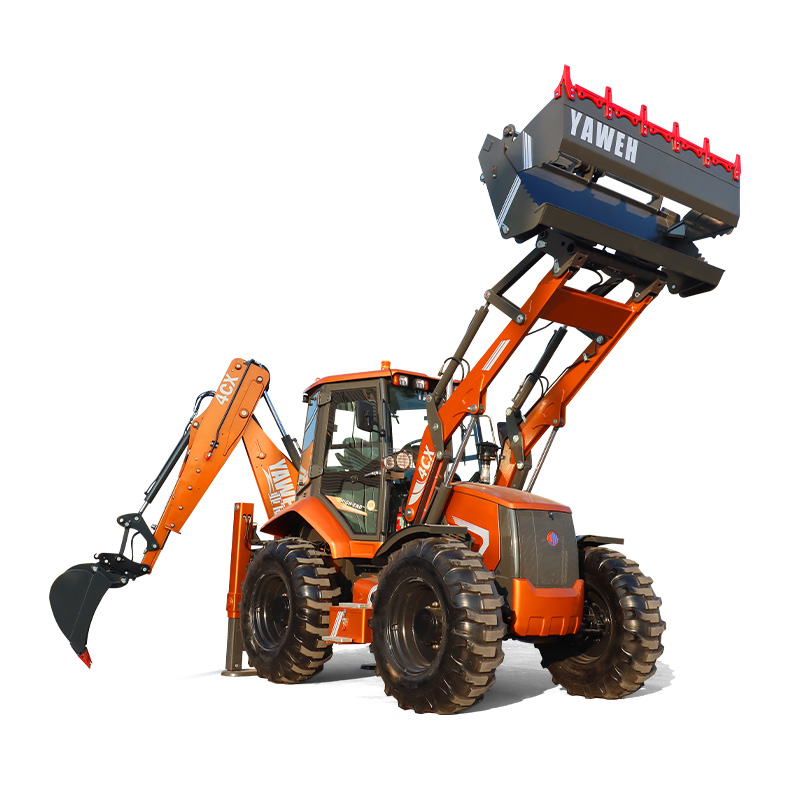
Evaluating tipping load and ROC is essential before finalizing any equipment purchase or rental.
Official specifications provide a helpful baseline. However, real job sites rarely match pristine testing environments. You must adjust your expectations based on actual site conditions to maintain safety.
Consider this the essential forum reality check. OEM specifications assume operation on flat, reinforced concrete. Operating on deep mud, loose soil, or sloped grades changes everything. Soft ground allows tires to sink unevenly. Slopes shift your center of gravity drastically. These common factors severely reduce your safe lifting limits. A 6,000 lb rating on concrete might drop to 4,000 lbs on a muddy hill.
Attachments add significant dead weight to your boom. You must subtract the physical weight of these tools from your machine's total payload capacity. Heavy tools consume valuable lifting power before you even grab a load. Common heavy attachments include:
Heavy-duty pallet forks and carriages
Hydraulic thumbs installed on the rear stick
Forestry grapples and concrete crushers
Oversized trenching buckets
Static weight behaves differently than moving weight. Transporting liquid loads creates dangerous dynamic sway. Swinging suspended pipes side-to-side alters boom leverage unexpectedly. Traveling over uneven ground while holding a raised bucket compounds tipping risks instantly. You must keep loads low to the ground during transit to mitigate dynamic shifting.
Note: Experienced operators generally employ a strict rule of thumb on job sites. They deduct 15–20% from the official rated capacity when working in unimproved conditions. This practice helps maintain a proper Environment, Health, and Safety (EHS) margin.
Equipment size dictates physical lifting power directly. Choosing the correct size class ensures you have enough power without wasting fuel or space. We categorize these machines by their digging depth and overall frame size.
These machines feature under 10ft dig depths. They fit perfectly into tight urban sites and residential landscaping jobs. Their lighter frames make them easy to transport. Front lift capacity typically ranges from 2,500 to 4,000 lbs. They handle pallets of sod or small dirt piles effectively.
These machines feature 14 to 15ft dig depths. The standard class remains the most common industry workhorse globally. Front lift capacities range from 5,500 to 7,500 lbs. Rear boom lift capacities typically range from 2,000 to 3,000 lbs. They balance power and maneuverability perfectly for general construction.
These massive units feature 16ft+ dig depths. Manufacturers design them for deep utility work and heavy pipe laying. Front lift capacities reach 8,000 to 10,000+ lbs. Rear boom capacities expand to 3,500 to 4,500+ lbs. They require substantial operating space but deliver unmatched raw power.
| Machine Class | Dig Depth | Estimated Front Lift | Estimated Rear Lift |
|---|---|---|---|
| Compact / Mini | Under 10 ft | 2,500 - 4,000 lbs | 800 - 1,500 lbs |
| Standard | 14 - 15 ft | 5,500 - 7,500 lbs | 2,000 - 3,000 lbs |
| Heavy-Duty | 16+ ft | 8,000 - 10,000+ lbs | 3,500 - 4,500+ lbs |
Match your machine class directly to the single heaviest object you routinely lift. Do not base your equipment choice on average daily loads. If you frequently move a 4,000 lb concrete barrier, you need a machine rated well above that number.
Tip: Evaluate your daily lifting habits closely. If you frequently lift objects pushing a standard machine to its 90% capacity limit, step up to the next size class. Doing so reduces hydraulic wear, prevents system overheating, and ensures much better long-term reliability.
Drivetrain configurations impact overall machine performance. Selecting a four-wheel-drive unit changes how the machine interacts with difficult terrain. It provides distinct advantages for heavy lifting operations.
A backhoe loader 4x4 configuration adds crucial base weight to the machine frame. The heavier front axle lowers the overall center of gravity. This added lower-body mass slightly improves lifting stability on rough terrain. You gain confidence when navigating muddy or uneven job sites while carrying heavy loads.
A versatile backhoe loader helps streamline your entire operation. When correctly sized for your maximum lifting needs, one machine performs multiple roles. It eliminates the need to transport separate skid steers and mini excavators to the same site. You simplify logistics and reduce site congestion immediately.
Heavier machines require proper transport planning. Remind your logistics team that a heavier 4x4 machine demands specific trailer weight ratings. You might also need specific Commercial Driver's Licenses (CDL) to tow it legally across state lines. Always confirm regional transport regulations before moving heavy equipment between sites.
Note: Engaging four-wheel drive dramatically improves ground traction. It gives you excellent pushing power when driving into a dense dirt pile. However, four-wheel drive does not inherently increase the maximum lift specification of your hydraulic system.
Understanding equipment capabilities ensures safety and efficiency on every job site. You should never base your operations purely on raw hydraulic power. Instead, prioritize Rated Operating Capacity (ROC) and account for your daily terrain conditions. Recognizing how boom extension reduces leverage will prevent catastrophic tipping accidents.
Follow these final operational guidelines:
Base equipment choices strictly on the heaviest single lift you routinely perform.
Always subtract the dead weight of specific attachments from your total payload capacity.
Apply a 15–20% capacity reduction when operating on muddy, sloped, or unimproved terrain.
Take time to calculate your peak load requirements today. Factor in your heaviest attachments and typical ground conditions. Consult your local equipment dealer to review exact OEM load charts before finalizing any machine acquisition. Protect your crew by choosing equipment verified to handle your toughest tasks safely.
A: Yes, most standard-size backhoe loaders can lift a standard sedan (3,000-4,000 lbs) with the front bucket, provided it is properly balanced and secured.
A: Lift capacity decreases as the loader arms rise and push the load further from the machine’s center of gravity. Maximum capacity is usually rated at ground level or carry height.
A: Yes, significantly. An extendable dipper stick (e-stick) at full extension operates on a long lever arm, drastically reducing the safe lifting weight compared to keeping the boom tucked close to the machine.


