
English


Views: 0 Author: Site Editor Publish Time: 2026-06-17 Origin: Site


Selecting heavy machinery represents a major investment for any contractor. Every operation relies on moving materials and excavating ground efficiently. You need versatile equipment to stay competitive in today's market. While doing the job of two machines gives these units their core appeal, buying the wrong configuration causes headaches. Poor choices often lead to underutilized capacity, excessive maintenance downtime, or delayed project timelines. This guide focuses strictly on the crucial technical evaluation criteria and site-specific configurations you must consider. You must rely on evidence-based procurement decisions rather than top-level definitions. We bypass basic explanations to dig directly into daily operational realities. You will learn exactly how to match equipment dimensions to your typical job site footprints. We will also explore essential attachment strategies and auxiliary hydraulic capacities. Finally, you will discover why vetting your regional supply chain network remains just as important as evaluating the iron itself.
Site matching is primary: Operating weight and dimensional constraints must align with your standard job site footprints and local transport regulations.
Hydraulics dictate versatility: Evaluating auxiliary hydraulic flow is more critical than raw engine horsepower when planning for complex attachments.
TCO extends beyond the sticker price: Maintenance access, telematics, and local dealership support significantly influence the true lifecycle cost of the machine.
OEM vetting mitigates risk: Choosing a backhoe loader manufacturer requires assessing parts availability SLAs and warranty structures, not just brand recognition.
Before you review equipment brochures, you must audit the physical realities of your daily operating environments. A backhoe loader for construction sites might perform flawlessly on an open highway project. However, it could fail entirely during tight urban utility repairs. Equipment must fit the space where it works.
You need to assess several physical and logistical constraints before making a selection. Consider these primary site-matching factors:
Footprint and Maneuverability: Assess the typical turning radius required for your projects. Evaluate standard steering against 4-wheel steer options. Confined spaces demand higher agility. You should prioritize machines allowing operators to navigate obstacles safely.
Transport Logistics: Cross-reference the machine operating weight against your current hauling fleet capabilities. Check local transport regulations carefully. Permit weight restrictions often dictate the maximum machine size you can move efficiently. Overweight loads generate costly delays.
Surface and Terrain Conditions: Decide between two-wheel drive and four-wheel drive configurations. Establish flat surfaces often suit 2WD models perfectly. Muddy, uneven, or grading-heavy sites make 4WD mandatory. Traction directly impacts your daily earthmoving productivity.
Document the operational constraints of your three most recent projects. If space limitations caused delays previously, adjust your strategy immediately. Prioritize models offering tighter turning radii. You might also select side-shift configurations over maximum dig depth capabilities.
Ignoring the combined transport weight of the machine and its heavy attachments.
Assuming a larger machine automatically yields faster project completion times.
Forgetting to measure gate widths and alleyway clearances on residential sites.
Neglecting local bridge weight limits on standard hauling routes.
Evaluating backhoe loader specifications requires looking past standard marketing metrics. You must focus on performance data impacting daily productivity directly. Engine horsepower matters, but it rarely tells the full story alone.
You face a crucial decision regarding standard versus extendable dig depths. The industry standard usually occupies the 14-foot class. You must decide if paying a premium for an extendable dipper stick makes sense. Pushing depths to 18 feet or more helps tremendously in deep utility trenching. However, it adds weight and complexity.
Lift capacity and breakout force determine how much material you move per hour. Evaluate the straight-line tipping load of the loader end. Next, verify the bucket breakout force on the backhoe end. The machine must handle your heaviest routine materials easily. Wet clay, dense gravel, and concrete debris demand robust structural integrity.
Engine power requires careful balancing against modern emissions compliance rules. Most machines fall within the 70 to 110 horsepower range. You must factor in Tier 4 Final emissions requirements. Consider the operational reality of DEF (Diesel Exhaust Fluid) and DPF (Diesel Particulate Filter) maintenance routines.
| Configuration Type | Typical Dig Depth | Primary Advantage | Ideal Application Scenarios |
|---|---|---|---|
| Standard Dipper Stick | Up to 14 feet | Lighter operating weight, higher stability | General site prep, shallow residential utilities, landscaping |
| Extendable Dipper Stick | 18 to 20+ feet | Extended reach reduces machine repositioning | Deep municipal sewer lines, commercial foundations, water mains |
Always verify the auxiliary flow rate of the hydraulic system. Measure this in Gallons Per Minute (GPM). High-flow attachments like cold planers or heavy breakers will underperform if hydraulic specs fall short. Raw horsepower means nothing if the hydraulic pump cannot deliver sufficient flow to the work tool.
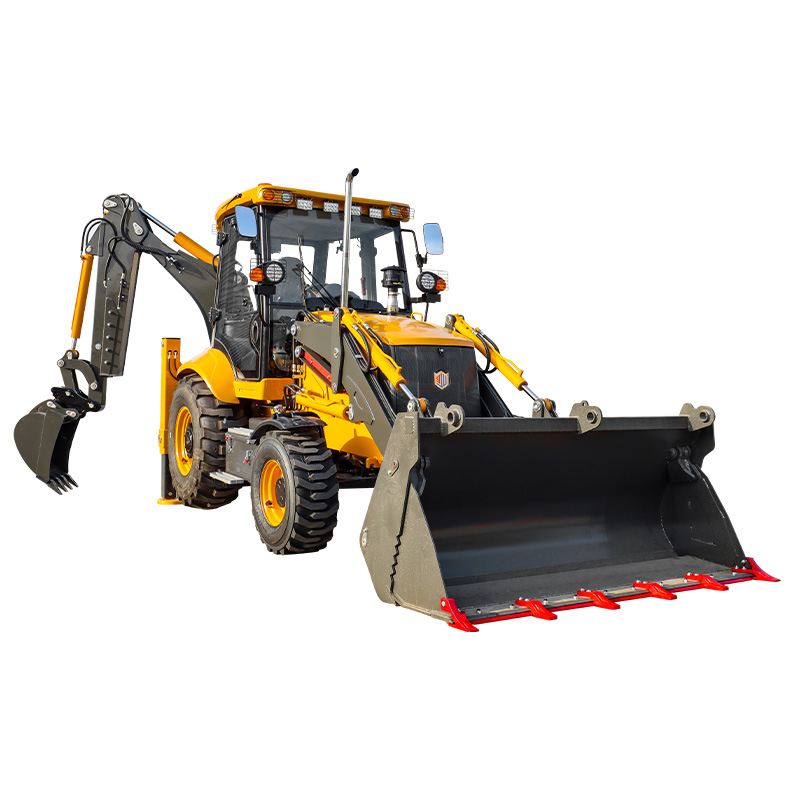
Properly matching your machine specifications to job site realities ensures maximum daily productivity and prevents underpowered operations.
A backhoe loader provides incredible versatility on any job site. The right tool carrier configuration prevents the machine from sitting idle between digging phases. You must view the equipment as a multi-functional power plant.
Front loader configurations require careful assessment before purchase. Compare standard general-purpose buckets against multi-purpose buckets. A 4-in-1 bucket allows operators to doze, grade, level, and grapple materials. This single attachment eliminates the need to bring a secondary skid steer to small sites.
Rear attachments define the true capabilities of your machine. Assess the absolute necessity of hydraulic breakers, earth augers, and vibratory compactors. Base this assessment strictly on your historical contract scopes. Do not buy specialized attachments for speculative future work. Rent them until demand justifies a purchase.
Quick coupler systems represent a critical decision point for fleet managers. Weigh the upfront capital cost of hydraulic quick couplers against the daily labor saved. Mechanical pin-on systems reduce your initial expenditure safely. However, they drastically increase downtime during frequent tool swaps.
Standardize coupler systems: Ensure all new machines share a universal coupler design. This allows seamless attachment sharing across your entire fleet.
Match flow rates: Check the hydraulic flow requirements of legacy attachments before buying a new carrier machine.
Protect hydraulic lines: Install protective routing for auxiliary hoses. Flying debris easily damages exposed hydraulic circuits during demolition work.
Train operators thoroughly: A 4-in-1 bucket provides massive efficiency only if operators know how to use the clam shell function properly.
Even the best-engineered heavy machinery causes severe project delays if the support network remains flawed. Choosing a reliable backhoe loader manufacturer effectively starts a long-term service partnership. You buy the local dealership's competence just as much as the steel.
Dealership proximity directly dictates your recovery speed during breakdowns. Calculate the actual travel time from the nearest certified dealer to your primary operating zones. Mechanics charging travel time by the hour will drain your maintenance budget rapidly. Close proximity ensures faster technician dispatch times.
You must demand transparency regarding parts availability Service Level Agreements (SLAs). Ask the dealer for concrete data regarding standard parts fulfillment timelines. A guaranteed 24-hour parts delivery policy minimizes critical downtime. Machines sitting broken for weeks destroy project profitability.
Warranty structures require meticulous comparison across different brands. Compare standard warranty periods carefully. Look beyond the basic one-year unlimited hours coverage. Evaluate the cost-to-benefit ratio of extended powertrain and hydraulic warranties. Complex modern hydraulic systems justify extended coverage packages frequently.
What percentage of routine maintenance parts do you stock locally?
Do you provide mobile field service trucks for emergency on-site repairs?
Are your technicians factory-certified for Tier 4 Final emissions diagnostics?
Do you offer guaranteed replacement rental machines during warranty repairs?
Procuring the ideal heavy equipment demands a disciplined alignment of site realities and precise technical specifications. You must prioritize high auxiliary hydraulic capacity over raw engine horsepower. Optimizing your specific attachment strategies ensures the machine rarely sits idle. Thoroughly vetting the regional support network guarantees you receive parts and service promptly. Fleet managers who follow these technical evaluations secure highly utilized assets. These evidence-based decisions reliably accelerate project timelines. Focus on matching the exact dimensions, capabilities, and dealer support network to your daily operational constraints.
A: For general construction, utility, and site prep, machines in the 70 to 110 horsepower range serve as the industry standard. Heavy civil or deep trenching applications usually require models at the top end of this spectrum. Conversely, residential site work often functions highly efficiently at 70 to 80 horsepower.
A: Center-mount backhoes provide excellent overall stability and remain ideal for wide-open sites. Side-shift models allow the backhoe boom to slide horizontally across the rear frame. This unique feature makes them vastly superior for tight urban construction sites where you must dig flush against walls or existing fences.
A: With rigorous preventative maintenance and standard operating conditions, a high-quality machine typically operates efficiently for 6,000 to 8,000 hours. Surpassing this threshold usually means the equipment will soon require major powertrain rebuilds or comprehensive hydraulic system overhauls to maintain daily productivity.


