
English


Views: 0 Author: Site Editor Publish Time: 2026-06-24 Origin: Site


Many buyers assume the sticker price of compact earthmoving equipment represents their entire financial commitment. This misconception leads to stretched budgets and compromised project timelines. When you look at a machine on the dealer lot, the base figure only tells a fraction of the story. You are investing in a comprehensive operational system. Contractors, landscapers, and property owners frequently miscalculate their true expenses by ignoring attachments, transport logistics, routine maintenance, and rapid depreciation. Failing to account for these elements undermines your return on investment. A machine sitting idle because you lack the proper transport trailer becomes a liability. This guide provides a realistic breakdown of upfront equipment investments. We explore the critical thresholds determining whether you should rent or buy. Understanding the hidden operational expenses of acquiring a compact digger helps you make an informed decision aligning with your site requirements.
Base Pricing Realities: A new dedicated mini backhoe typically ranges from $15,000 to $35,000+, while 3-point hitch attachments for existing tractors run between $4,000 and $8,000.
The Break-Even Threshold: Purchasing generally becomes more cost-effective than renting once projected utilization exceeds 150 to 200 hours annually, or when rental rates approach $30 per hour for extended periods.
Hidden TCO Factors: Transport equipment (trailers, heavy-duty trucks), insurance, and routine hydraulic maintenance can add 20-30% to the initial purchase price in the first year.
Application-Specific Value: The true ROI depends on utility; evaluating a mini backhoe loader for loading, trenching, and material handling dictates whether the machine justifies its cost over a specialized mini excavator.
Understanding equipment categories is the first step in assessing your initial investment. The market divides these machines into three distinct tiers: dedicated sub-compact loaders, towable units, and attachments for compact tractors. Each category serves a different operational need and carries a vastly different financial footprint. A dedicated machine offers an integrated chassis designed specifically for digging and loading. Towable units operate independently but lack drive mobility. Attachments leverage the power of a tractor you already own.
Entry-level towable units represent the lowest barrier to entry. These machines are pulled behind a truck or ATV to the dig site. They utilize small independent gas engines to power their hydraulic pumps. While they require a minimal initial investment, they suffer from severe limitations in power, digging depth, and site mobility. You must manually reposition them using the bucket, which drastically slows down production on larger jobs. The lack of a drive motor means every time you finish a section of trench, you have to lift the outriggers, reach out with the boom, plant the bucket teeth into the dirt, and drag the entire unit forward. This process exhausts operators and burns daylight.
Tractor attachments offer a middle-ground solution. If you already own a compact utility tractor, adding a backhoe implement seems logical. These units mount either via a standard three-point hitch or a specialized sub-frame. Sub-frame mounts provide essential structural rigidity, protecting your tractor's transmission casing from the immense stress of digging. Three-point mounts demand a lower initial investment but carry a high risk of causing catastrophic damage to the host tractor if pushed beyond light-duty tasks. When you hit a massive root or a buried boulder, the breakout force transfers directly into the tractor's cast aluminum or iron rear end. A sub-frame distributes that violent kinetic energy along the entire length of the tractor chassis.
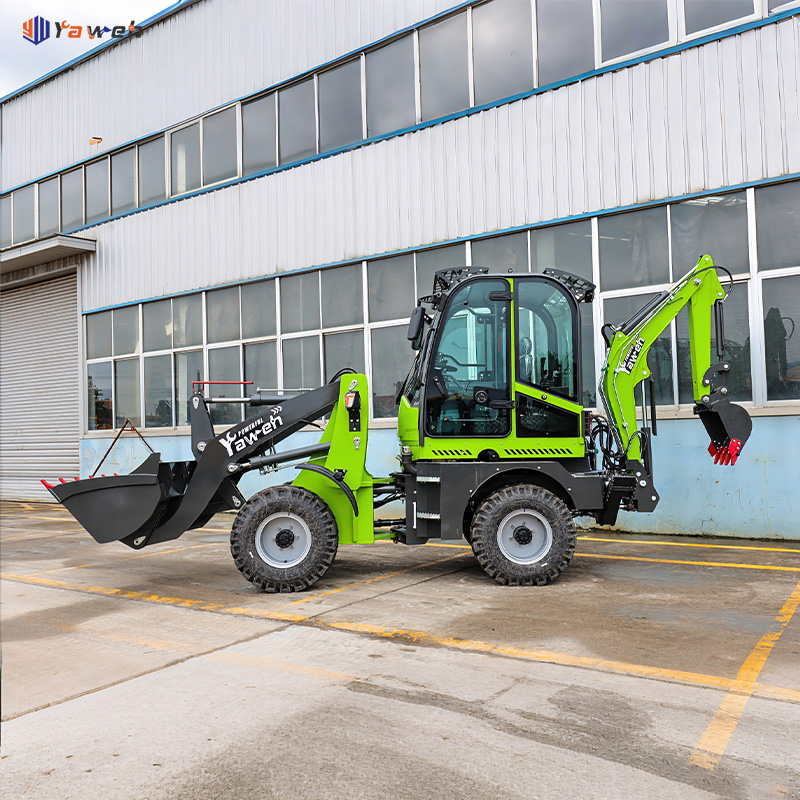
Dedicated sub-compact machines represent the premium tier. These commercial-grade units are engineered from the ground up to handle dual-purpose tasks. A dedicated mini backhoe provides superior hydraulic flow, better weight distribution, and enhanced operator ergonomics. The frame is built to withstand simultaneous loading and excavating stresses. The hydraulic pumps on these units are matched perfectly to the cylinder sizes, ensuring smooth, predictable boom and stick movements. You do not experience the jerky, lagging hydraulic response often found on cheaper attachment setups.
The used equipment market offers an alternative path. Depreciation hits compact construction equipment hardest in the first few years. Purchasing a machine with moderate hours can yield significant savings. However, these savings come with inherent risks. Hydraulic pumps wear down, pins and bushings develop play, and hoses degrade. You must thoroughly inspect any used machine for fluid leaks and structural cracks. Check the boom pivot points for excessive slop. If the bucket wiggles side to side more than an inch without moving the control stick, you are looking at an expensive line-boring and bushing replacement job.
| Equipment Category | Mobility | Structural Integrity | Primary Use Case |
|---|---|---|---|
| Towable Units | Manual repositioning only | Light-duty tubular steel | Occasional residential trenching |
| Tractor Attachments | Driven by host tractor | Depends on sub-frame presence | Farm maintenance, landscaping |
| Dedicated Machines | Fully integrated 4WD | Heavy-duty commercial chassis | Daily contracting, site prep |
Deciding whether to rent or purchase hinges on your projected annual utilization. The rental market charges premium rates for daily and weekly use. Rental yards factor in maintenance, depreciation, and their own profit margins. When you rent, you pay for convenience and lack of long-term commitment. However, if your projects stretch over weeks or occur frequently throughout the year, rental fees accumulate rapidly. You also have to factor in the hidden costs of renting, such as mandatory damage waivers, environmental fees, and fuel surcharges.
The standard industry metric for evaluating this decision is the utilization formula. Many field experts rely on a specific hour threshold to determine financial viability. If you project using the equipment for more than two hundred hours annually, ownership typically becomes the superior financial choice. Below this threshold, the carrying costs of ownership often outweigh the cumulative rental fees. You must honestly evaluate your project pipeline before committing to a purchase. Look at your past twelve months of work and calculate exactly how many hours you spent manually digging or waiting on a rental delivery.
Consider the cumulative cost of renting a machine for several separate projects throughout the season. Each rental event incurs mobilization fees, delivery charges, and administrative time. You also face the risk of equipment unavailability during peak construction months. Owning the equipment guarantees access whenever a project demands it. This immediate availability allows you to tackle emergency repairs or capitalize on sudden job opportunities without waiting on a rental yard schedule. If a water line breaks on a Sunday morning, owning your equipment means you can start digging immediately.
The opportunity cost of renting extends beyond mere dollars. Every time you rent, you must adapt to a potentially different machine. Control layouts, hydraulic responsiveness, and machine dimensions vary between brands. Ownership allows you to build muscle memory and operational efficiency with a single machine. Familiarity breeds speed and safety on the job site. Furthermore, the logistical friction of coordinating pickup and drop-off times consumes valuable daylight hours that should be spent moving dirt. You lose at least two hours of productivity on the first day of any rental just dealing with paperwork and transport.
When assessing equipment value, you must compare utility against alternatives. The primary competitor to the compact backhoe is the mini excavator. While mini excavators excel at pure digging tasks due to their continuous rotation capabilities, they lack versatility. A dedicated mini backhoe loader serves two distinct functions on the job site. It digs trenches at the rear and moves bulk material at the front. This dual-purpose nature often eliminates the need to bring a second machine, like a skid steer, to the site.
The front-end loader advantage is significant. Moving gravel, backfilling trenches, and grading topsoil require substantial lifting capacity and forward momentum. A compact excavator struggles with these tasks, often requiring tedious bucket-by-bucket material transfer. The loader arms on a backhoe provide the necessary breakout force and dump height to load trucks or distribute material efficiently across a site. You can scoop a full yard of mulch, drive it across a residential lawn with minimal turf damage, and dump it exactly where the landscaping crew needs it.
Evaluating a mini backhoe loader for loading operations requires looking at specific specifications. Dump height clearance dictates whether you can load over the sides of your dump trailer. Lift capacity determines how many trips you need to move a pile of dense wet topsoil. Travel speed across the site impacts overall daily productivity. These machines are engineered to shuttle material quickly. The transmission systems, often hydrostatic, allow for seamless forward and reverse directional changes without clutching, which drastically speeds up loading cycles.
Trenching efficiency presents a different dynamic. The rear digging arm operates on a limited swing arc, typically around one hundred and eighty degrees. You must place your spoil piles carefully within this radius. When excavating long trenches, you must frequently lift the stabilizers, reposition the machine forward, and reset. A mini excavator, with its continuous rotation, can dig, swing, and dump in a full circle without moving its tracks. You must weigh this specific digging limitation against the broader versatility of the loader function. If your business is ninety percent trenching, buy an excavator. If you do a mix of grading, loading, and digging, the backhoe wins.
The initial purchase covers only the base machine. To maximize utility, you need attachments and tooling. A standard digging bucket handles basic trenches, but specialized tasks require specific tools. Mechanical thumbs are essential for grabbing rocks, logs, and debris. Narrow trenching buckets save time and material when laying conduit. Ripper teeth break through hardpan and frost. Each of these additions increases your overall capital outlay but drastically improves site capabilities. Trying to clear brush without a thumb attachment will double your labor time and frustrate your operators.
Transport logistics represent a massive, frequently ignored expense. You cannot drive these machines long distances between job sites. You need a heavy-duty trailer with a sufficient weight rating to carry the machine safely. Furthermore, you need a tow vehicle capable of handling the combined weight of the machine and the trailer. If your current truck lacks the necessary towing capacity, upgrading your vehicle becomes an unavoidable part of acquiring the heavy equipment. You also need heavy-duty Grade 70 transport chains and load binders to secure the equipment legally.
Maintenance and consumables demand a consistent budget. Hydraulic systems require clean fluid and fresh filters to operate efficiently. Ignoring these routine maintenance items leads to catastrophic component failures. Implement a strict maintenance schedule to protect your investment:
Grease all pivot points, loader arms, and bucket pins at the start of every work day.
Check engine oil and hydraulic fluid levels before turning the key.
Inspect all rubber hydraulic hoses for abrasion, bulging, or weeping fittings weekly.
Blow out the radiator and hydraulic oil cooler fins with compressed air to prevent engine overheating.
Torque wheel lug nuts and inspect tire pressure to ensure stability during heavy lifting.
Insurance and taxes further impact your bottom line. Heavy equipment represents a significant liability. You need comprehensive insurance to protect against theft, vandalism, and transit accidents. Depending on your jurisdiction, you may also face annual property taxes on the equipment. If you finance the purchase, interest rates will increase your total payout over the life of the loan. All these factors must be calculated into your operational budget. Do not assume your standard commercial auto policy covers a machine once it rolls off the trailer.
If you plan to use the equipment for commercial work, establishing a baseline hourly rate is crucial. You cannot simply guess a number or blindly copy competitors. Your rate must cover the machine's depreciation, routine maintenance, operator labor, business overhead, and a reasonable profit margin. Operating below your true break-even point means you are essentially paying your clients for the privilege of working on their property. You must track every drop of diesel and every tube of grease to understand your true operating costs.
New operators must implement strict pricing checklists. Mobilization fees are non-negotiable. Moving the machine to the site consumes fuel, causes wear on your truck and trailer, and takes valuable time. You should charge a flat transit fee or an hourly travel rate. Additionally, implementing a minimum-hour policy protects you from unprofitable, short-duration jobs. Driving across town for a thirty-minute stump removal is a guaranteed financial loss without a minimum charge. Set a strict four-hour minimum for any job that requires starting the truck.
Site-specific risks must also factor into your pricing. Working in tight residential areas with limited access slows down production and increases the risk of property damage. Digging near marked underground utility lines requires extreme caution and slower operation. You must adjust your rates to compensate for these challenging conditions. Complex jobs demand higher compensation due to the increased liability and reduced operating speed. If you have to hand-dig around a gas line before using the machine, bill for that manual labor accordingly.
Industry averages vary wildly based on regional economies and specific machine capabilities. Operators utilizing specialized attachments like hydraulic breakers or augers command higher rates than those performing basic trenching. Your local market dictates the ceiling for your hourly charges, but your internal operational expenses dictate the floor. You must find the sweet spot that keeps your schedule full while ensuring long-term business profitability. Build relationships with local plumbers and electricians who frequently need short trenches dug; they often become reliable, repeat clients.
Financing traps ruin many small contracting businesses. Extended loan terms on heavily used equipment create dangerous situations. If you finance a high-hour machine over five or six years, the equipment may require major overhauls or completely fail before you finish paying it off. You end up making monthly payments on a machine that cannot generate revenue. Always align your financing terms with the realistic remaining lifespan of the equipment. Read the fine print regarding early payoff penalties and variable interest rates.
Mounting systems for tractor attachments require careful consideration. Utilizing a cheap three-point hitch mount for heavy excavation is a massive risk. The three-point system is designed for pulling implements, not withstanding the violent twisting forces of digging through roots and rocks. Without a proper sub-frame distributing these forces across the entire tractor chassis, you risk cracking the transmission housing. This specific failure often exceeds the value of the tractor itself. Never compromise on structural mounting hardware.
Dealer support and parts availability dictate your uptime. Buying imported, off-brand machines might save capital initially, but it creates massive operational risks. When a proprietary hydraulic valve fails on an unsupported machine, you cannot simply drive to a local dealer for a replacement. Your machine sits idle while you attempt to source parts internationally. Prioritize established brands with robust local service networks to ensure rapid repairs and consistent parts availability. A machine is only as good as the parts network standing behind it.
Calculate your projected annual operating hours using past project data to determine if you cross the ownership break-even threshold.
Evaluate your specific job site needs to decide if the dual-purpose loader function outweighs the need for continuous rotation.
Verify your current truck towing capacity and trailer weight ratings before finalizing any equipment purchase.
Request detailed maintenance schedules and parts availability guarantees from local dealers to ensure long-term support.
A: Towable units represent the entry-level tier of excavation equipment. They require a minimal initial investment compared to dedicated machines. They are highly restricted in mobility and power but serve well for occasional, light-duty trenching on private property where speed is not a primary concern.
A: It depends entirely on your application. A backhoe loader provides dual functionality, excelling at both digging and moving bulk materials across a site. A mini excavator is vastly superior for dedicated, continuous digging in tight spaces due to its continuous rotation.
A: With rigorous adherence to maintenance schedules, commercial diesel engines and hydraulic pumps in these machines typically provide thousands of hours of reliable service. Regular fluid changes and daily greasing prevent premature wear and extend the operational lifespan significantly.
A: You generally need a heavy-duty, dual-axle equipment trailer. Ensure the trailer's Gross Vehicle Weight Rating comfortably exceeds the combined weight of the machine, all attachments, and the trailer itself to guarantee safe transit and legal compliance.
A: Yes, but it requires patience and the right technique. Due to lower breakout forces compared to larger excavators, you must sever the root system systematically. Adding a mechanical thumb or a specialized ripper tooth drastically improves stump removal efficiency.
A: Tractor attachments require a moderate investment. It is critical to factor in the cost of a proper sub-frame mounting kit, which is absolutely necessary to protect your tractor's chassis from severe structural damage during heavy digging operations.


