
English


Views: 0 Author: Site Editor Publish Time: 2026-07-15 Origin: Site


The deployment of a newly acquired mini backhoe introduces immediate productivity potential, but also introduces critical site safety and asset preservation risks. Premature equipment failure, site accidents, and operational inefficiencies often stem from a lack of standardized operator onboarding and failure to respect the specific load dynamics of compact equipment. Establishing strict pre-operation baselines, mastering dual-function controls (loader and excavator), and adhering to site-specific safety compliance frameworks are mandatory steps to protect your investment and personnel. Operators transitioning from larger excavators often misjudge the stability limits of compact frames. A rigorous approach to daily inspections and control familiarization prevents rollover incidents and hydraulic system damage. You must treat this machine with the same operational respect as heavy-duty earthmovers. Implementing these technical guidelines ensures your crew maximizes uptime while maintaining strict safety standards across all excavation and material handling tasks.
Pre-Operation Baselines: Documenting fluid levels, hydraulic line integrity, and structural checkpoints on day one prevents voided warranties and establishes a maintenance baseline.
Safety Interlocks and Startup: Understanding safety bars, hydraulic lockouts, and proper machine startup/shutdown protocols is critical to avoiding accidental control activation.
Stability is Non-Negotiable: Safe operation requires mandatory deployment of stabilizers and the front loader bucket before engaging the rear digging arm.
Terrain Adaptability: Utilizing a mini backhoe loader 4x4 requires specific traction and load-balancing protocols to prevent rollovers on uneven grades.
Risk Mitigation: Standard Operating Procedures (SOPs) must include utility mapping, three-point contact cabin entry, and strict adherence to the manufacturer's load charts.
Accepting delivery of new earthmoving equipment requires a systematic approach. Inspecting transport tie-down points reveals if the machine shifted during transit, which can bend axles or stress the chassis. Checking for transit damage involves walking the perimeter and looking for scratched cylinder rods, dented hydraulic lines, or cracked glass. Verifying the presence of the manufacturer's operator manual in the cabin is a strict compliance requirement. Completing warranty activation checklists immediately locks in your factory support. You must document the exact engine hours and take photographs of the machine from all four sides before it ever touches dirt.
Walkaround protocols force operators to inspect for factory defects, loose fittings, and hydraulic hose wear. Track tension and tire pressure variations drastically alter the machine's center of gravity. You must check structural welds on the boom, stick, and loader arms before the first engine start. Look for paint flaking around weld seams, which indicates metal stress. Inspect the bucket teeth and cutting edges to ensure the retaining pins are fully seated. Verify that all grease zerks took grease at the factory by looking for slight seepage around the pin joints.
Verifying engine oil, hydraulic fluid, coolant, and fuel levels establishes a baseline for future preventative maintenance. Documenting these metrics allows mechanics to track consumption rates. A new engine might consume a slight amount of oil during the break-in period, but hydraulic fluid levels should remain static. Check the hydraulic sight glass when the machine is parked on level ground with all cylinders retracted.
| Fluid System | Inspection Method | Acceptable Baseline Condition | Action if Non-Compliant |
|---|---|---|---|
| Engine Oil | Dipstick check before cold start | Between MIN and MAX hash marks, clear amber color | Top off with OEM specified viscosity |
| Hydraulic Fluid | Sight glass on hydraulic tank | Visible in the center of the glass, clear fluid | Inspect all hoses and cylinders for leaks |
| Engine Coolant | Overflow reservoir level | At the COLD fill line | Add 50/50 pre-mixed heavy-duty coolant |
| Diesel Fuel | Cabin gauge and water separator | Full tank, no water in the separator bowl | Drain water separator, fill with clean diesel |
Testing Roll-Over Protective Structures (ROPS) and Falling Object Protective Structures (FOPS) involves checking the mounting bolts for proper torque. Seatbelts must latch securely and retract without binding. Safety interlocks prevent the machine from starting if the operator is not seated or if the hydraulic lockout is disengaged. Backup alarms must sound clearly over ambient site noise. A completed, signed pre-operation checklist confirms the machine is mechanically sound and compliant with site safety regulations.
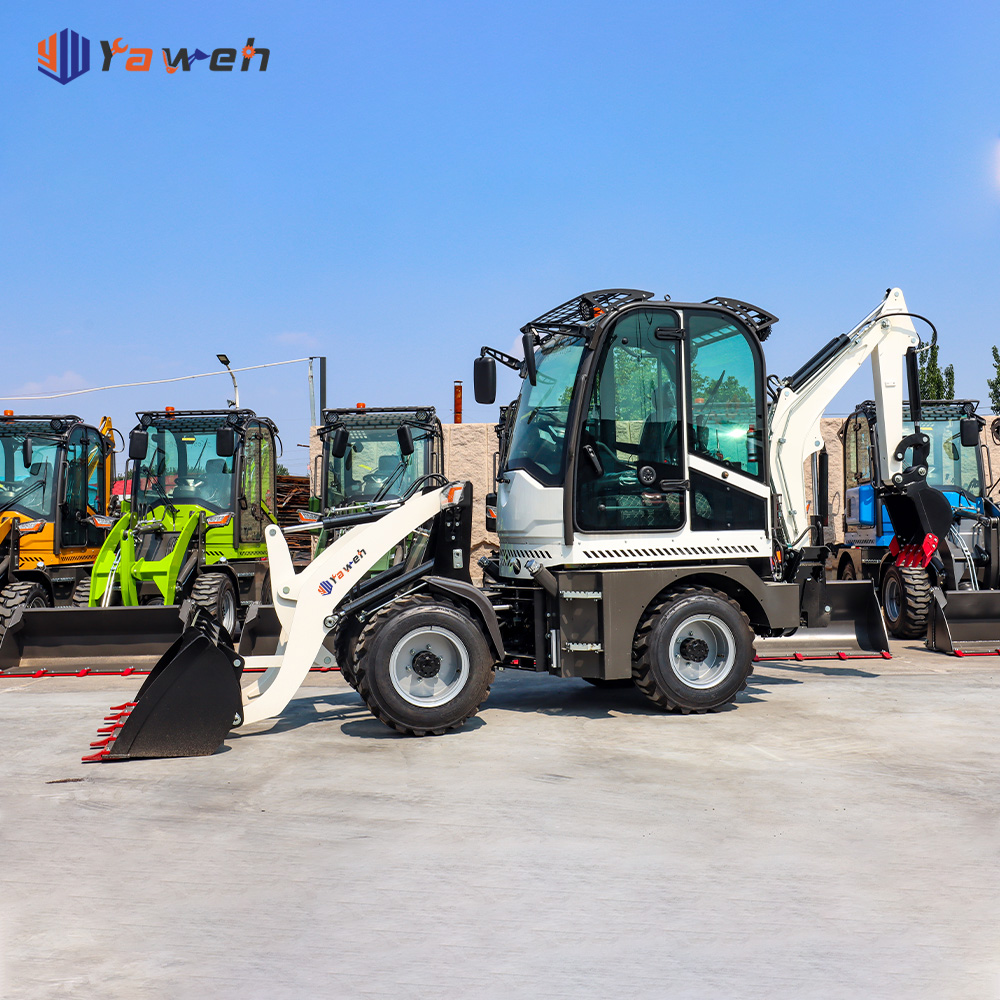
Standardizing safe entry and exit protocols mitigates slips and falls. Operators must utilize grab handles and steps while keeping hands free of tools. Three-point contact means two hands and one foot, or two feet and one hand, are always in contact with the machine. Never use the steering wheel or hydraulic joysticks to pull yourself into the cab. Muddy boots easily slip off metal footpegs, so clear debris from your footwear before climbing up.
Decoding warning lights, temperature gauges, and hydraulic flow indicators keeps the operator informed of machine health. Locate and test the safety hydraulic lockout lever (often called a dead-man switch) and the parking brake. The lockout lever physically blocks pilot pressure to the joysticks. If a sleeve catches a joystick while turning around in the seat, the lockout prevents the boom from swinging into a nearby wall or worker.
Starting a compact earthmover requires a specific sequence to protect the starter motor and hydraulic pumps.
Engage the safety bar or hydraulic lockout lever.
Verify the transmission is in neutral and the parking brake is set.
Turn the key to the accessory position to cycle the glow plugs (if operating a diesel engine in cold weather).
Start the engine at low throttle and let it idle.
Cycle the hydraulic cylinders gently to warm up the hydraulic fluid to operating temperature.
Differentiating between ISO and SAE control patterns for the backhoe arm is a mandatory step. ISO pattern uses the left joystick for swing and stick, and the right joystick for boom and bucket. SAE pattern swaps the boom and stick functions. Operator confusion between control patterns leads to erratic boom movements. Mandatory pattern verification must occur before active digging. Most modern machines feature a pattern changer valve under the floorboard or inside a side compartment.
Executing low-speed, low-risk test maneuvers builds operator muscle memory before active work. Perform air-digging exercises, light bucket curls, and travel tests in an open, flat area. Get a feel for the hydrostatic drive response and the sensitivity of the loader joystick. Practice transitioning the seat from the forward-facing loader position to the rear-facing excavator position without snagging clothing on the controls.
Testing ground compaction, soil type (Class A, B, C), and structural bearing capacity ensures the weight of the machine doesn't trigger a trench cave-in. Operating a mini backhoe loader 4x4 for construction sites requires constant evaluation of the surface. Wet clay behaves differently than loose gravel. Position the machine far enough back from the trench edge to prevent the sheer weight of the front axle from collapsing the trench wall.
A rigid digging platform prevents the machine from being pulled into the excavation. Lower the front bucket flat against the ground to anchor the front end. Deploy the rear stabilizers to lift the rear tires slightly off the ground. The machine must sit level. If digging on a slight incline, adjust the stabilizers independently to level the chassis. Never dig over the side of the machine without the stabilizers fully deployed and planted on solid ground.
Techniques for smooth, combined hydraulic movements maximize breakout force without destabilizing the machine. Curling the bucket while simultaneously crowding the stick pulls the cutting edge through the soil efficiently. Relying solely on the boom cylinder to rip through hardpan overloads the hydraulic pump and causes the relief valve to squeal. Feather the joysticks to blend the movements. Jerky, abrupt stops send shockwaves through the pins and bushings, accelerating wear.
Mandatory protocols for site marking (e.g., 811 in the US), test-pitting, and maintaining safe clearances from identified underground hazards prevent catastrophic accidents. Electric, gas, and water lines often sit shallower than expected. Hand-dig or use vacuum excavation to expose marked utilities before bringing the bucket teeth anywhere near them. If you encounter unmarked warning tape or sand beds, stop digging immediately.
Strategic placement of excavated material prevents trench collapse and maintains clear lines of sight. Keep the spoil pile a minimum of 2 feet (0.6 meters) away from the excavation edge. If the pile gets too high, it can roll back into the trench or obscure the operator's view of ground workers. Swing the boom smoothly to dump the material, avoiding sudden stops that cause the machine to rock violently.
Reading and applying the manufacturer's load chart prevents hydraulic bypass, rear axle lift, or front-axle overload. The load center dictates how much weight the loader arms can safely lift at maximum height. Dense materials like wet sand or crushed concrete weigh significantly more per cubic yard than topsoil. Exceeding the rated operating capacity causes the rear tires to lift off the ground, completely eliminating your steering control.
| Material Type | Approximate Weight per Cubic Yard | Loading Technique |
|---|---|---|
| Dry Topsoil | 2,000 lbs | Full bucket scoop, level rollback |
| Wet Sand | 3,300 lbs | Half bucket scoop, avoid max height lift |
| Crushed Stone | 2,700 lbs | Penetrate pile at ground level, curl up |
| Broken Concrete | 3,500 lbs | Use extreme caution, secure loose pieces |
Proper bucket angles for penetrating stockpiles dictate efficiency. Keep the bucket flat on the ground and drive into the pile. Once the bucket is full, curl it back and lift slightly to break the material loose. For site leveling, use the backdragging technique. Tilt the bucket forward slightly and drag it in reverse to smooth out ruts and distribute loose dirt evenly. Ensure the load is centered in the bucket to prevent uneven wear on the loader arm pivot pins.
Keeping the loaded bucket low to the ground maintains a low center of gravity during transport. The carry position should be 4 to 6 inches above surface level. Traveling across a site with a raised bucket is a primary cause of equipment rollovers. If you hit a pothole or a rock with the bucket raised, the leverage will instantly tip the machine. Always look in the direction of travel and use a spotter in congested areas.
Assessing soil compaction, mud, and debris on dynamic job sites dictates your travel paths. Engaging 4-wheel drive systems appropriately maximizes traction in soft mud. However, leaving 4-wheel drive engaged on hard asphalt or concrete causes drivetrain wind-up, which damages the transmission and accelerates tire wear. Toggle the 4-wheel drive off when transiting across paved surfaces.
Deploying a mini backhoe loader 4x4 for engineering work demands precision operation in tight urban infrastructure projects. Managing auxiliary hydraulic flow for specialized attachments requires understanding the machine's gallons-per-minute (GPM) output. Hydraulic breakers, augers, and thumbs require specific flow rates. Sending too much flow to a breaker will destroy its internal seals, while too little flow renders an auger useless in hard clay.
Safe operational angles for traveling up or down inclines prevent longitudinal and lateral rollovers. The golden rule is to keep the heavy end pointed uphill. If the front bucket is loaded, drive forward up the hill and back down. If the bucket is empty, the rear backhoe attachment is usually heavier, so back up the hill and drive forward down it. Never travel across a steep slope, as the narrow track width of compact equipment offers very little lateral stability.
Bringing the loader bucket and backhoe attachment completely flat to the ground relieves hydraulic pressure. If a hydraulic hose bursts overnight, or if a control lever is bumped while the machine is off, suspended attachments will crash to the ground. Grounding the attachments also acts as a secondary parking brake, anchoring the machine in place.
Allowing the engine to idle for 2-3 minutes stabilizes temperatures, particularly on turbocharged models. Shutting down a hot engine immediately stops the flow of oil to the turbocharger. The residual heat bakes the stationary oil, causing coking in the bearings. A brief idle period allows the coolant and oil to carry heat away from critical engine components.
Securing the machine prevents unauthorized access and theft.
Engage the hydraulic safety locks.
Set the mechanical parking brake.
Turn off the ignition and remove the key.
Turn off the master battery disconnect switch if equipped.
Lock the cabin doors and secure any vandal covers over the dashboard.
Rapid swinging with a loaded bucket creates immense centrifugal force, threatening to tip the machine. Digging over the side without stabilizers deployed bends the chassis and blows out tires. Traveling with a raised bucket obscures vision and raises the center of gravity. Abrupt hydraulic stops cause the machine to bounce, fatiguing the operator and stressing the boom welds. Training programs must aggressively target these specific bad habits.
Implementing a tiered training program reduces operational risk. Start operators with open-area familiarization before moving them to active, confined construction zones. Require them to demonstrate proficiency in leveling the machine, trenching a straight line, and backfilling a hole safely. Balancing the speed of operation with the physical limits of compact machinery requires experience. Pushing a compact machine beyond its breakout force yields diminishing returns and guarantees premature component failure.
The safe operation of a new compact earthmover relies entirely on disciplined adherence to pre-operation checks, a thorough understanding of load dynamics, and strict site awareness. Skipping daily walkarounds or ignoring load charts directly leads to mechanical failures and site accidents.
Finalize your internal SOPs to mandate daily fluid and structural inspections before engine ignition.
Schedule mandatory operator orientation sessions focusing specifically on ISO/SAE control verification and stabilizer deployment.
Integrate the new machine into your fleet management software to automate preventative maintenance tracking based on engine hours.
Establish a strict zero-tolerance policy for traveling with raised loads or bypassing hydraulic safety interlocks.
A: Perform a thorough walkaround inspection focusing on shipping damage, hydraulic leaks, fluid levels, tire pressure or track tension, and ensure the operator manual is available in the cabin.
A: The safety bar or lockout lever disables the pilot controls, preventing accidental movement of the boom, bucket, or drive system when the operator enters or exits the cabin.
A: Drop the front loader bucket flat on the ground and extend the rear outriggers until the machine is level and the rear tires are slightly unweighted from the ground.
A: Yes, but strictly within the manufacturer's grade limitations. Always keep the heaviest end pointed uphill, carry attachments low to the ground, and avoid cross-slope travel.
A: Idle the engine, cycle the hydraulic cylinders gently through their range of motion without bottoming them out, and wait until the fluid reaches the manufacturer's specified operating temperature.
A: The left and right joysticks control the boom and stick differently in each pattern. Verifying the pattern switch before operation is a critical safety step to prevent unexpected movements.


